









Business Resilience
Open the game- Brand
- Financial Times
- Year
- 2023
- Objective
- Awareness
- Industry
- Tech & Telecom
- Mechanic
- Simulation & Strategy
- Platform
- Web
- Agency
- Phantom










Objective
Google Cloud wanted to reach C-suite executives across EMEA through the Financial Times' readership, making the case that smart use of data and AI strengthens business resilience and drives lasting growth rather than one-off wins. Rather than a standard sponsored article, the brand chose a format that would let senior decision-makers feel the trade-off between profitability and sustainability themselves.
Solution
Visitors land on a branded page on the Financial Times site, click Start, and step into the role of a senior executive at the fictional Sunrise Cereals Co. The story unfolds through a series of real business dilemmas, each presented as a choice between competing courses of action. Players spend a shared pool of 50 "smart points" across these decisions, so committing points to one priority means pulling them from another. After each choice, the story shows how a data-led approach would have sharpened the call, before moving to the next dilemma until the points run out and the session ends.
Results
10,234 game plays, 45,514 campaign page views, and 3,912 social engagements, with brand consideration for Google Cloud up 39% among the audience reached.
- 1
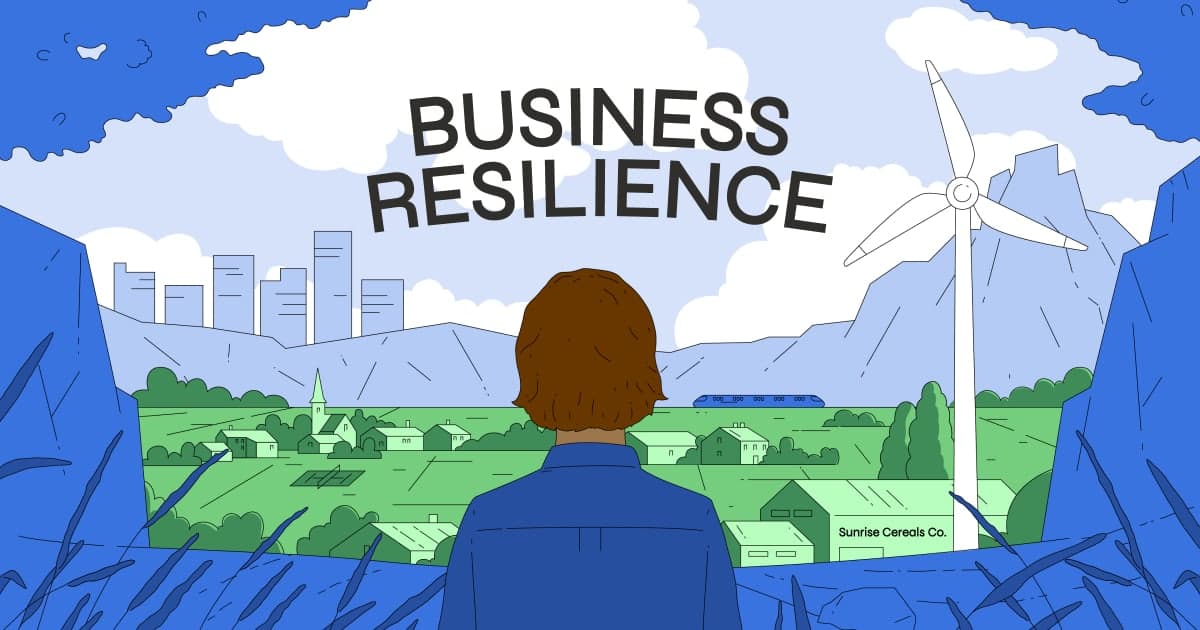
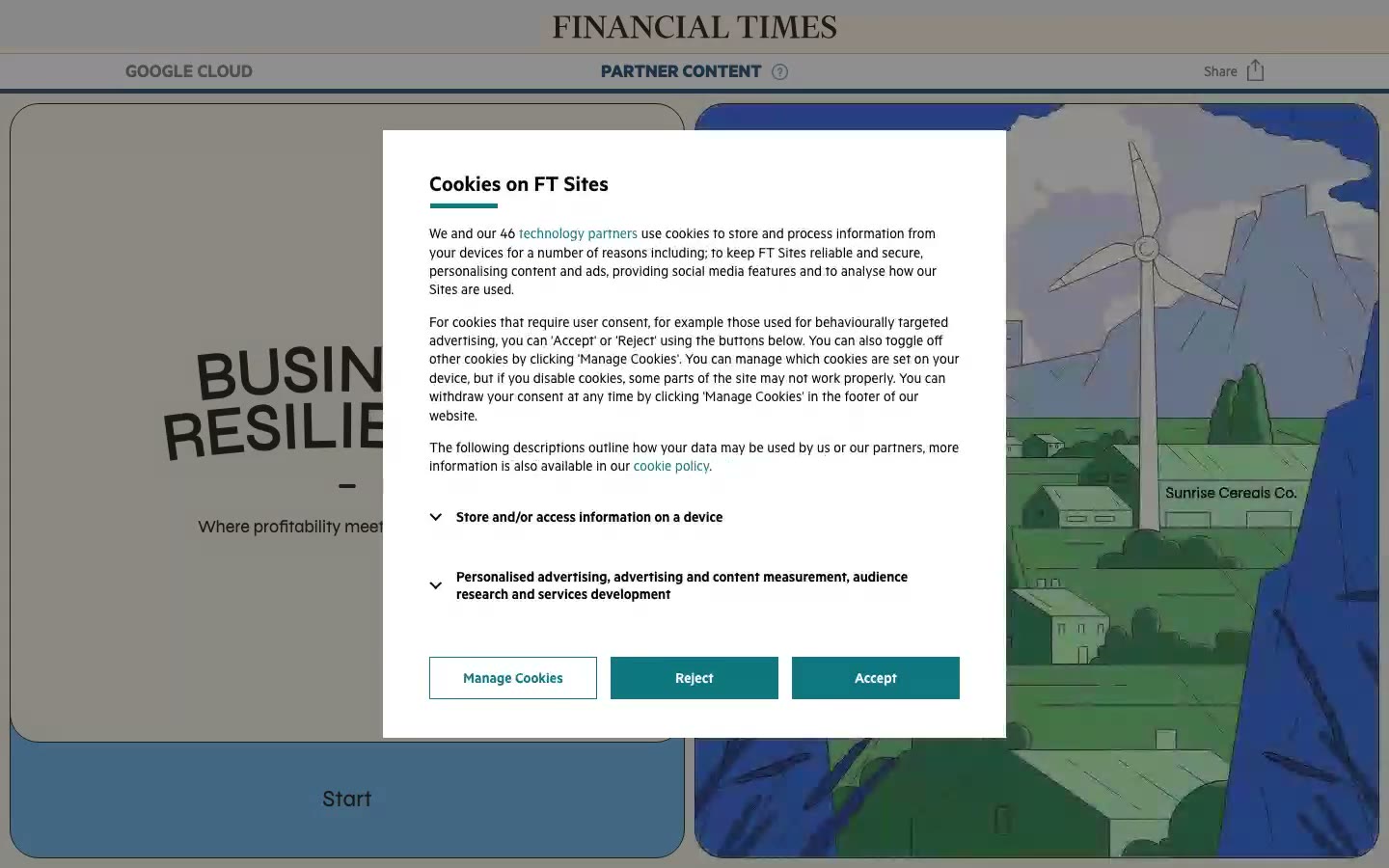
A cookie-consent banner covers the title screen until dismissed. The title screen then shows the game's name and subtitle over an illustration of a farm valley, with a single Start button; on a phone held upright the game instead asks the player to rotate to landscape, since play only works in that orientation.
- 2
An introduction frames the premise: a fictional cereal company is growing across regions and the player will make a series of decisions, some smarter and some more pragmatic, that determine whether the company stays profitable, sustainable, and eco-friendly.
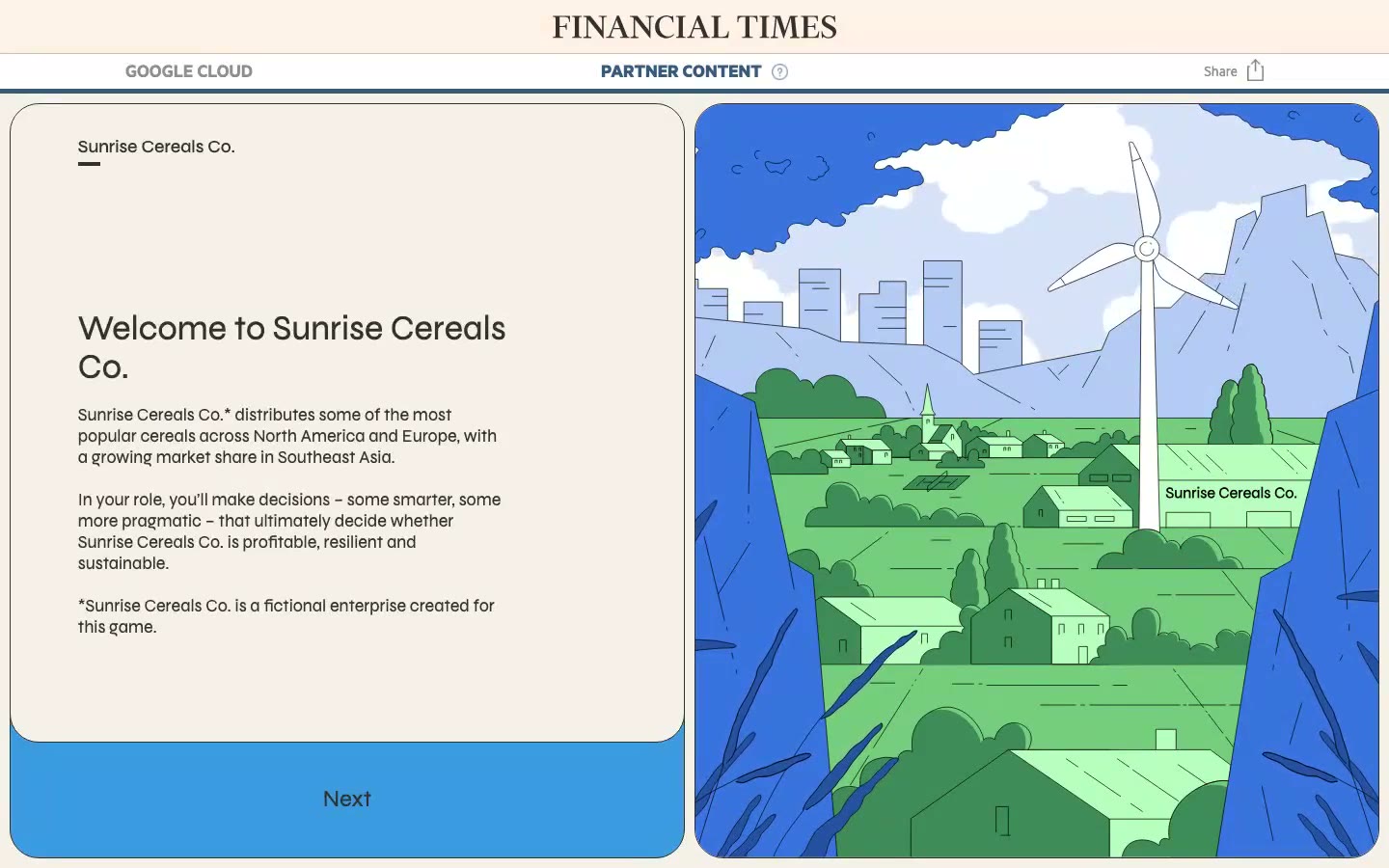
- 3
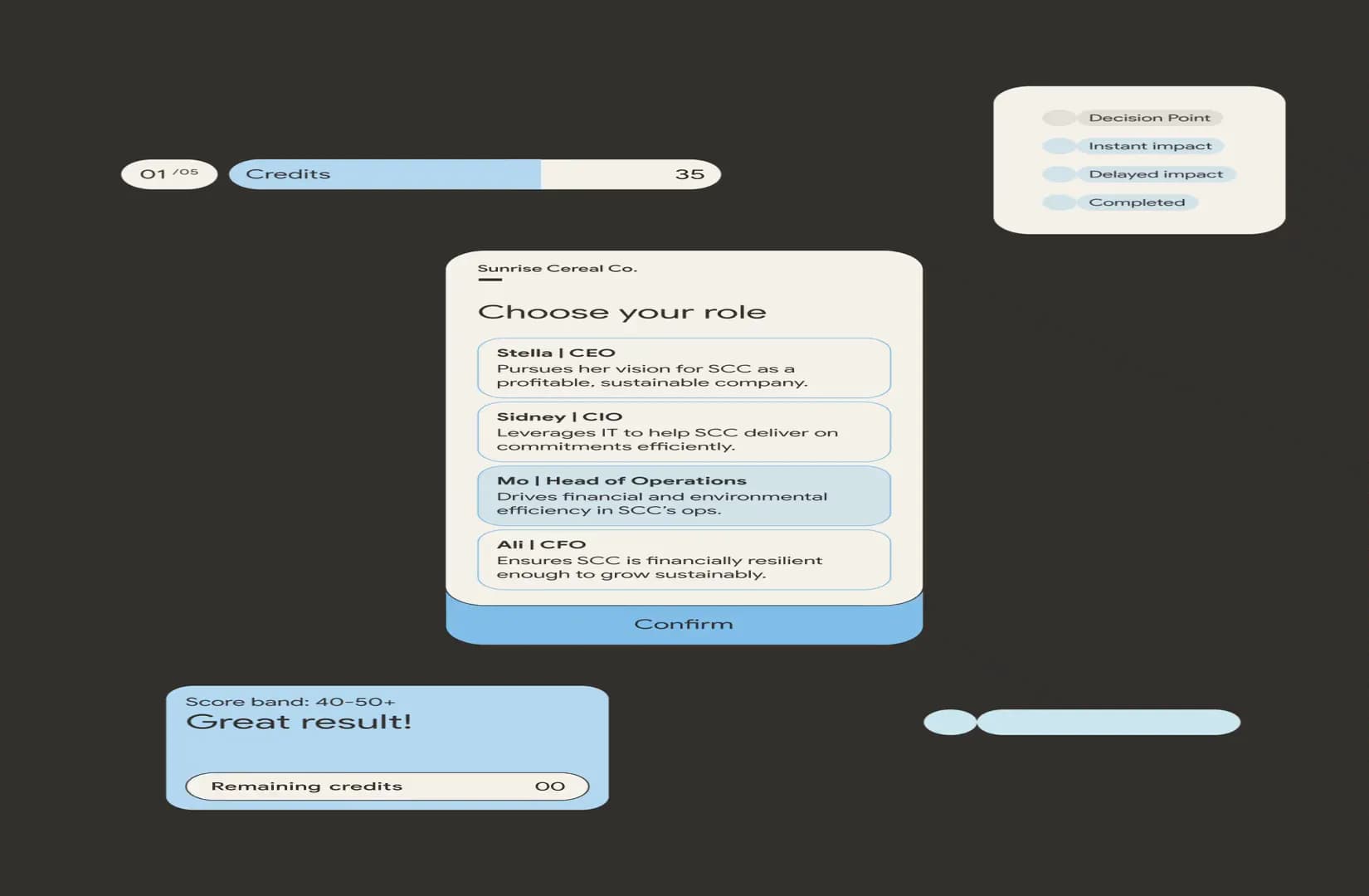
The player picks one of four executive roles to play as, each with a one-line motivation; selecting a role highlights its card and unlocks the button to continue.
- 4
A rules screen explains the core resource: the player starts with 50 points, decisions cost or return points, and the goal is to end with as many as possible. A persistent header then tracks the current round out of five and the remaining point total.
- 5
Each round opens with a short scenario describing a business problem, revealed by tapping to expand a set of response options. Each option carries a different point cost, and selecting one highlights it and confirms the exact spend before locking it in.
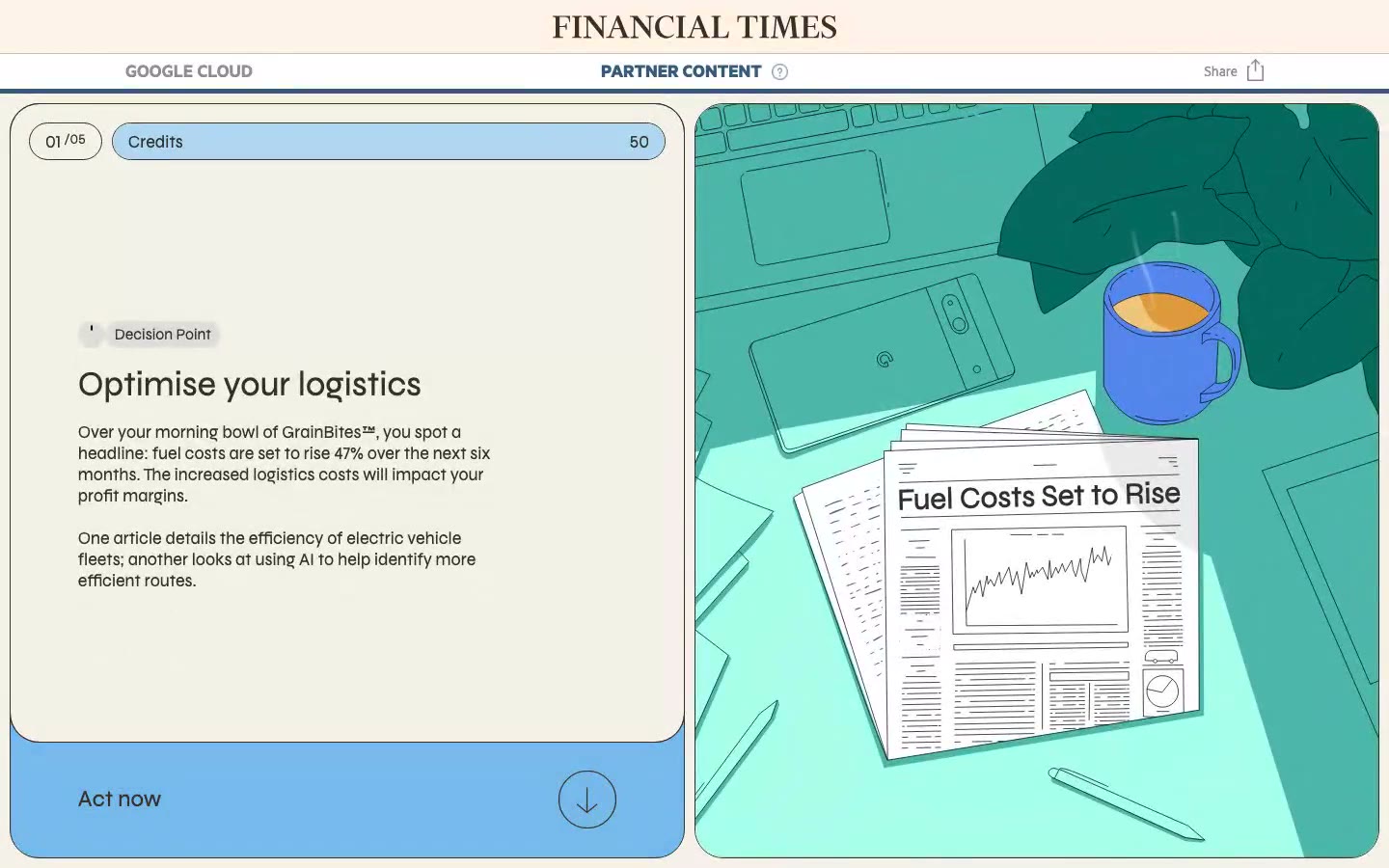
- 6
After spending, the game shows the outcome of the choice: a verdict and explanation of the effect on the business, paired with a points adjustment (a gain or a further loss) applied to the running total.
- 7
This scenario-choice-outcome loop repeats for five rounds, each with a different business problem and matching visual theme; some consequences resolve immediately while others only surface in later rounds.
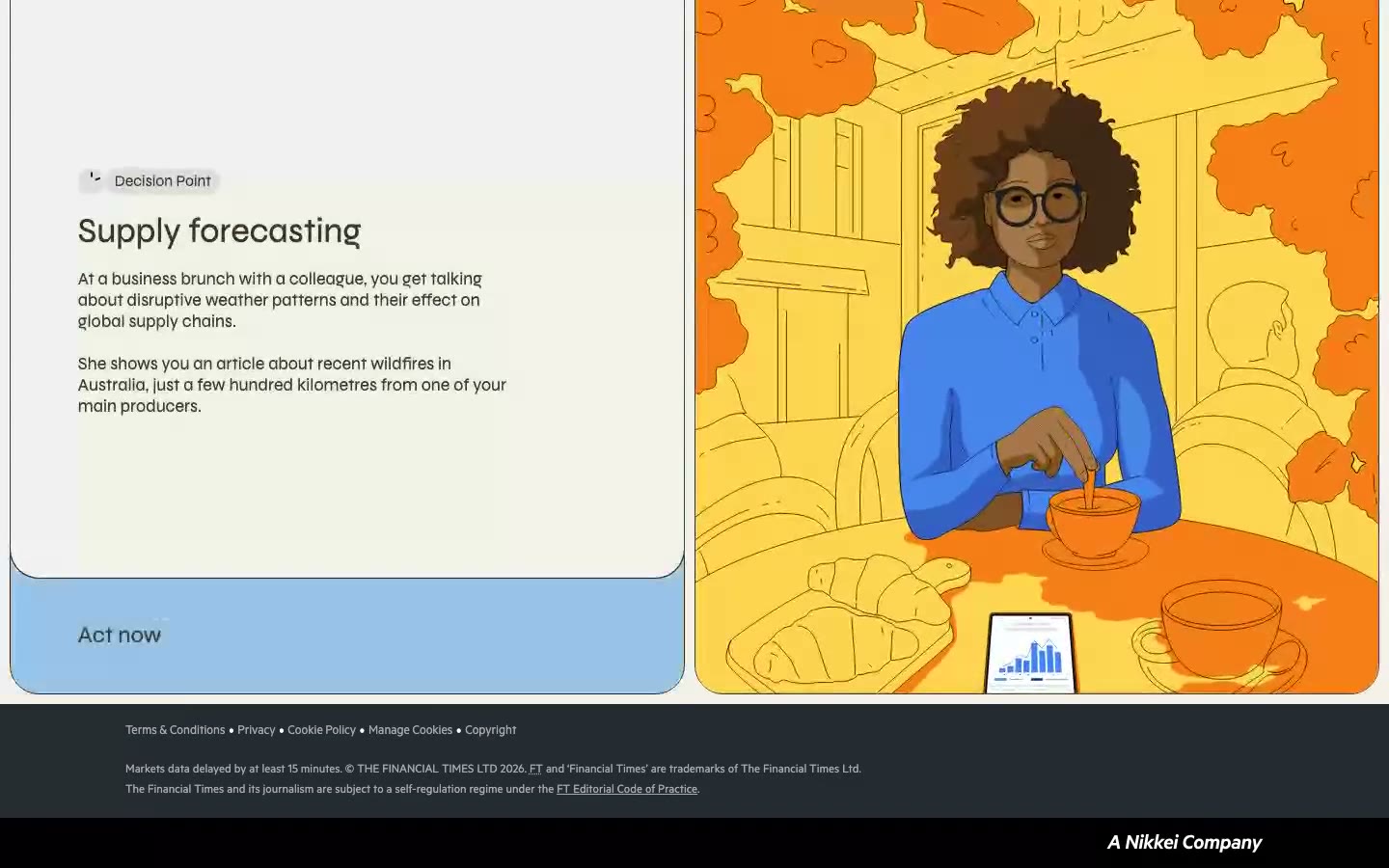
- 8
A final screen tallies the points remaining at the end of the five rounds, framing a higher total as a better business and environmental outcome, with an option to share the result.