










Value Your Friends
Open the game- Brand
- Iles De Paix
- Year
- 2012
- Objective
- Awareness
- Industry
- Other
- Mechanic
- Simulation & Strategy
- Platform
- Web
- Agency
- Globule Bleu






Objective
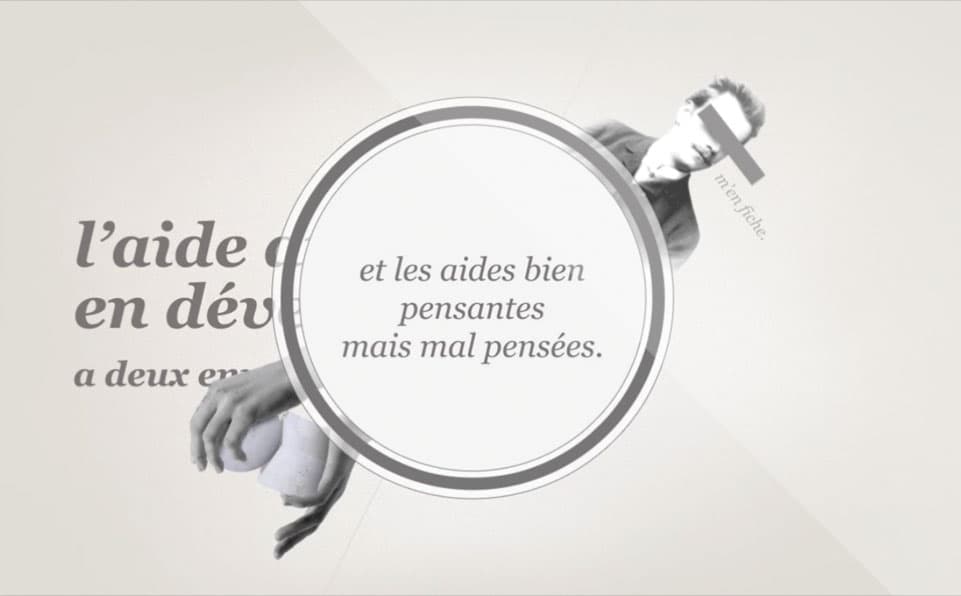
Belgian NGO Îles de Paix wanted to shift public opinion in Belgium about foreign aid: convince donors that spontaneous, unstructured giving (sending cash or food) is often wasted, while the NGO's own structured, on-the-ground development work actually pays off. The game served as the online, shareable arm of a 2012 print campaign, backed by Belgium's ministry for development cooperation.
Solution
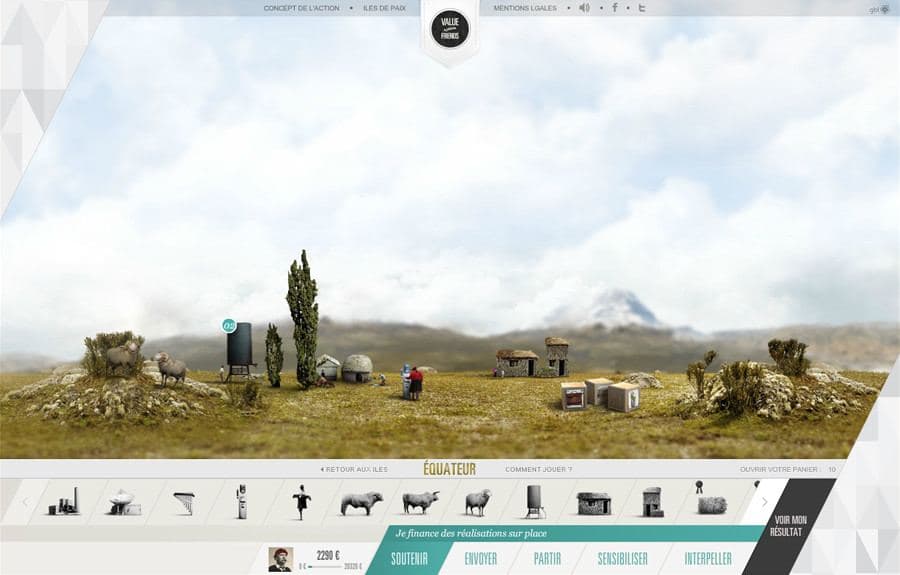
The player logs in with Facebook, and the game counts their friends and converts that number into a starting budget (calculated at the average Belgian annual donation per person), or plays with a default budget if they skip login. They then choose one of five countries where the NGO works and spend the budget from an illustrated catalog of aid items — livestock, a well, a school, and similar options. Some purchases turn out to be a trap: the money's gone and nothing was actually achieved, while others reflect the kind of sustainable, local investment the NGO promotes. Each purchase can post to the player's Facebook wall as a named line — for example, tagging a friend as having just bought a breeding bull for a village in Mali — nudging friends to come play. Along the way the player picks up facts about the countries, and the session ends with a breakdown of their choices so they can see where their money worked and replay with sharper decisions.
- 1
The player lands on a standalone promo site for the game and chooses to sign in with Facebook or play without connecting an account.
- 2
Signing in with Facebook pulls the player's friend count and converts it into a starting budget, multiplying friends by the average annual Belgian donation amount — more friends means more virtual money to spend on aid.
- 3
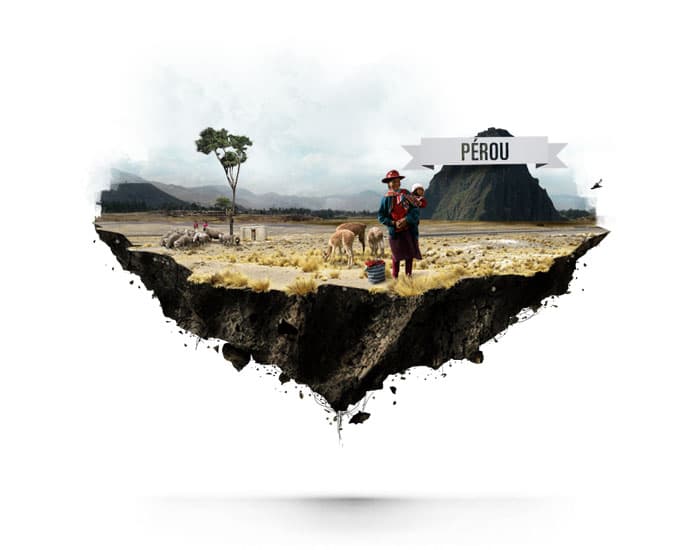
The player is dropped into the field and splits the budget across five countries where the sponsoring NGO operates, choosing which to visit first.
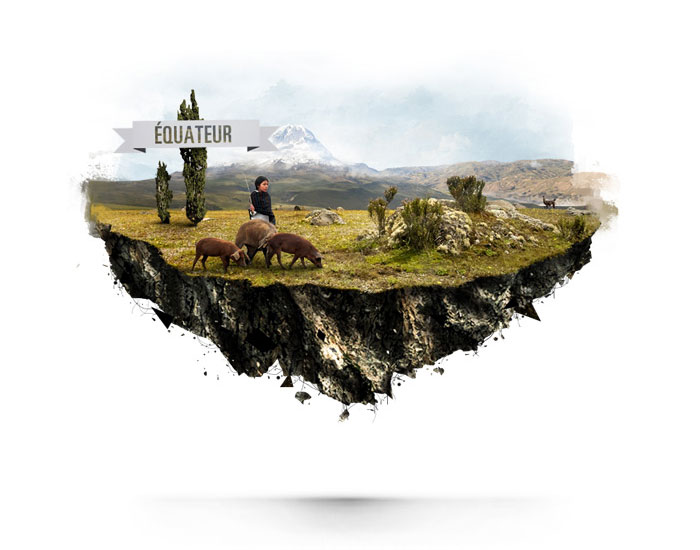
- 4
Inside each country, the player spends part of the budget on aid items from an illustrated catalog — schools, livestock, wells, and similar goods — while a factual briefing on that country runs alongside the shopping.
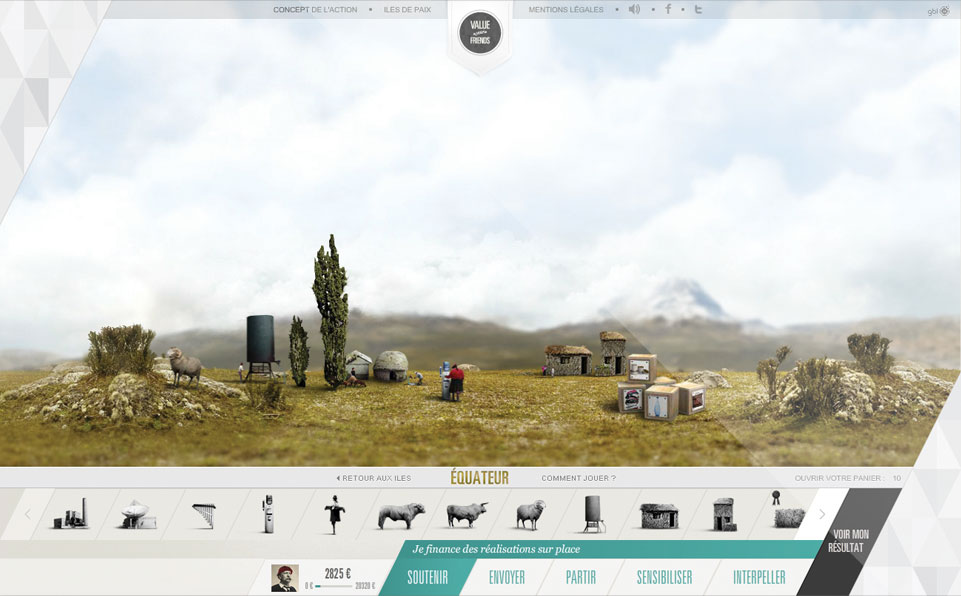
- 5
Some catalog items are deliberate traps: what looks like obvious help turns out to waste the money or backfire, teaching that local, sustainable solutions work where improvised aid does not.
- 6
Certain purchases auto-post to the player's Facebook wall under their name — such as buying a breeding bull in Mali — pulling friends into the game.
- 7
The game ends with a breakdown of the player's choices, showing what worked and what didn't so they can replay more effectively.
- 8
After playing, the player is invited to sign up for a newsletter with concrete ways to get involved in real development aid.