


RiotX Arcane
View the results- Brand
- Riot Games
- Year
- 2021
- Objective
- Awareness
- Industry
- Entertainment
- Mechanic
- Adventure & Quest
- Platform
- In-Game
- Agency
- North Kingdom




Objective
Riot Games used the Netflix premiere of Arcane to pull its whole game portfolio into one story, keeping fans engaged across the show's three-week rollout and nudging players of any single Riot title to try the others. Tying hub missions to real in-game rewards gave even non-players a reason to open League of Legends, VALORANT, Wild Rift, Legends of Runeterra, or Teamfight Tactics for the first time.
Solution
Players open riotxarcane.com and scroll sideways through a string of connected 3D neighborhoods, clicking hotspots to strike up conversations with characters from across Riot's games. Talking to them surfaces missions to complete, and finishing one sends a reward straight to the matching game's client — so players then log into that game to claim it. New districts and missions unlocked in scheduled waves timed to the show's rollout, starting with 25 missions and adding 15 more as later chapters aired, so returning visitors kept finding new ground to cover. A player's progress is tied to their Riot account, so a session can be picked back up right where it left off.
Results
The web hub drew over 15.4 million sessions from 4.4 million unique players, who spent an average of 9 minutes 45 seconds per visit. Riot's broader game portfolio saw a corresponding surge, with players logging 3 billion hours across its titles in November 2021, the campaign's peak month.
- 1
The player lands on a title screen for the hub's current phase, dismisses promotional banners, and is prompted to log into a Riot account — required to save progress and earn rewards — before launching the browser-based 3D scene.
- 2
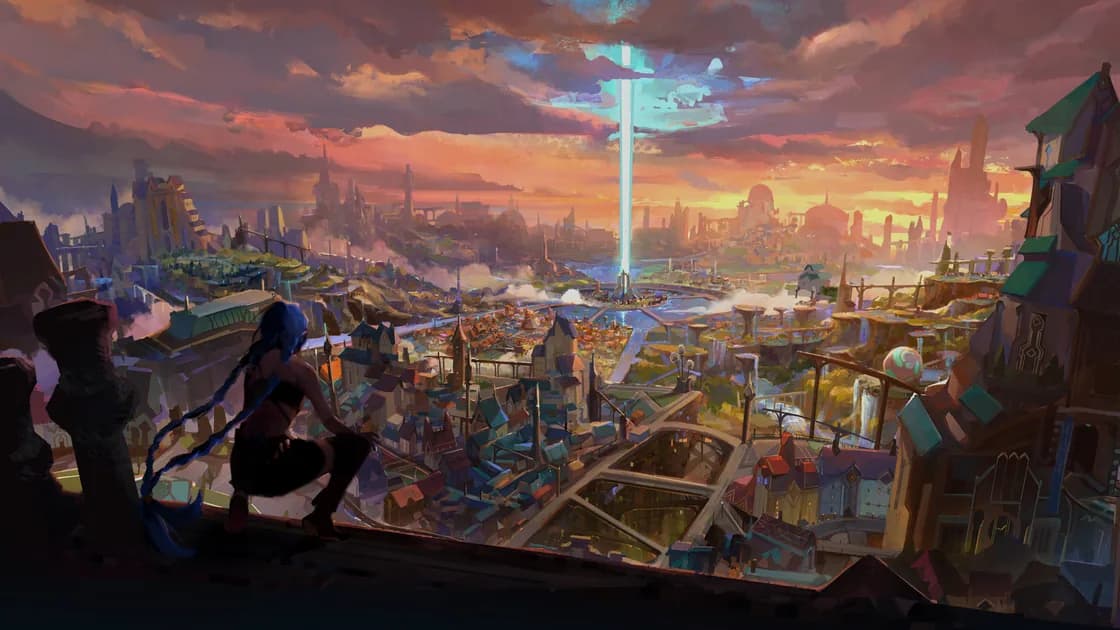
The framing premise is a magical rupture that collapses Runeterra, the Convergence and Earth-1 into one place, inviting the player to meet characters from across Riot's games and earn rewards for doing so.
- 3
Movement is a side-scrolling crawl through 3D locations, where the player hunts for highlighted clues and hotspots that trigger dialogue; a map icon lets the player teleport freely between unlocked districts.
- 4
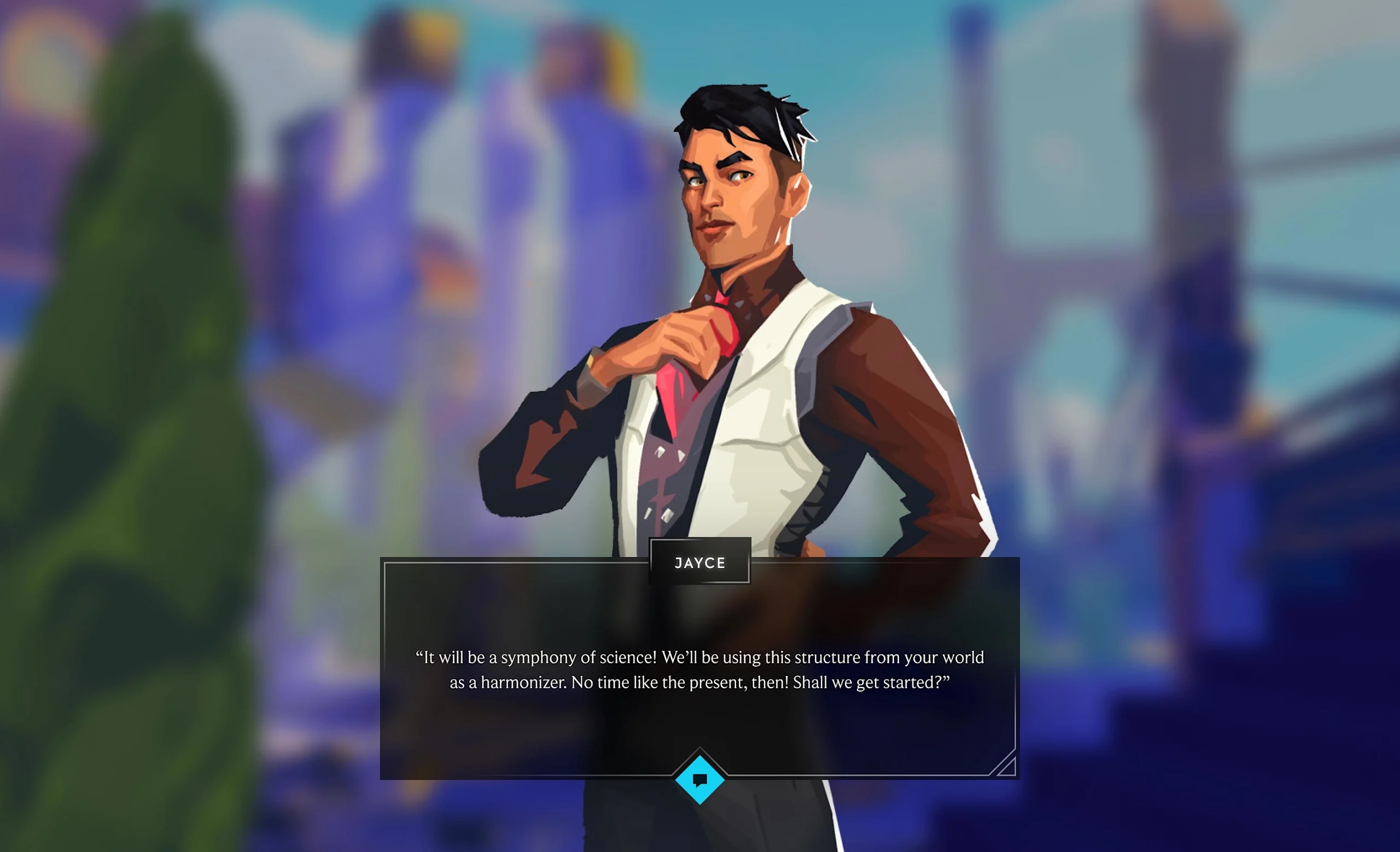
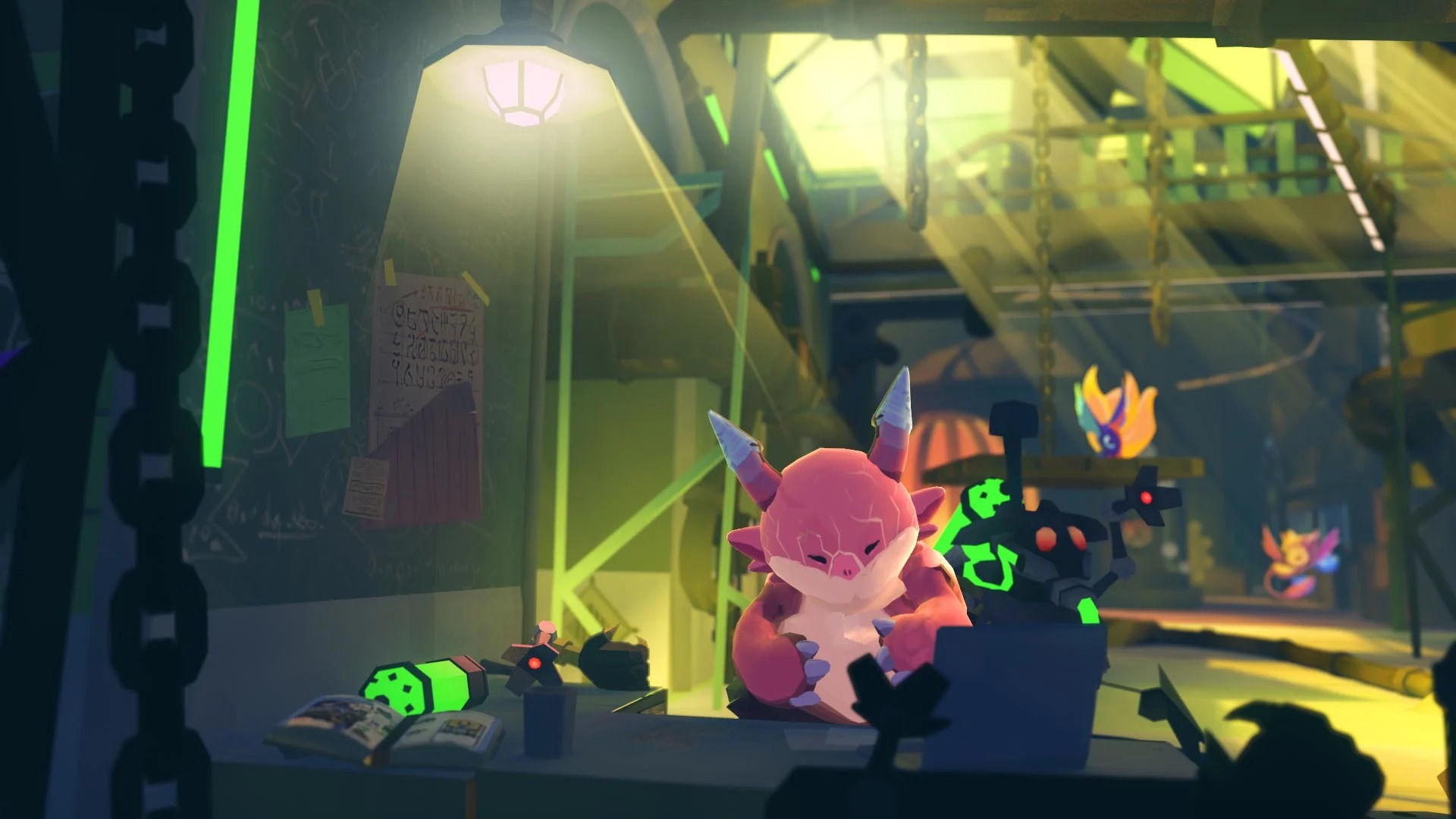
The hub is a set of connected districts: three Arcane locations (Arts District, Heimerdinger's Lab, The Lanes) alongside dedicated zones for League of Legends, Wild Rift, Legends of Runeterra, Teamfight Tactics and VALORANT, each populated by that game's characters.
- 5
The core loop is dialogue-driven questing: talking to characters advances branching conversations (some opening external game websites), unlocks fetch-quests like delivering items to named recipients, and gates progress behind correct dialogue choices or quiz answers.
- 6
Several districts break from dialogue into standalone minigames and puzzles — a timed shooting gallery, a silhouette-guessing challenge, a pipe-connecting puzzle with randomized layouts, and a multi-level puzzle sequence — each with its own scoped goal to beat before time runs out.
- 7
One-time collectible items are scattered across every district for the player to gather and bank toward later missions.
- 8
Optional easter eggs sit off the main paths — an interactive prop linking to a Prime Gaming promotion, a jukebox opening curated Spotify playlists, and a globe revealing a map of Runeterra.
- 9
Content unlocks in scheduled waves timed to the campaign's rollout, adding new districts and missions over the following weeks; completed missions deliver rewards automatically inside each linked game's own client, and the hub stays open for stragglers to finish outstanding missions after the final wave.