







McWorld
- Brand
- McDonald's
- Year
- 2008
- Objective
- Engagement
- Industry
- Food & Drink
- Mechanic
- Mini-Games
- Platform
- Web


Objective
By 2008, McDonald's was watching its youngest customers pour hours into virtual worlds like Webkinz and Club Penguin, and it wanted a destination of its own to hold that attention rather than lose it to competitors. Building McWorld also let a Happy Meal toy do more than sit in a toy box: it carried a code that only paid off once a kid logged in, so every meal became a reason to come back online. McDonald's even had kids vote on the world's name on happymeal.com, pulling its audience into the project before launch.
Solution
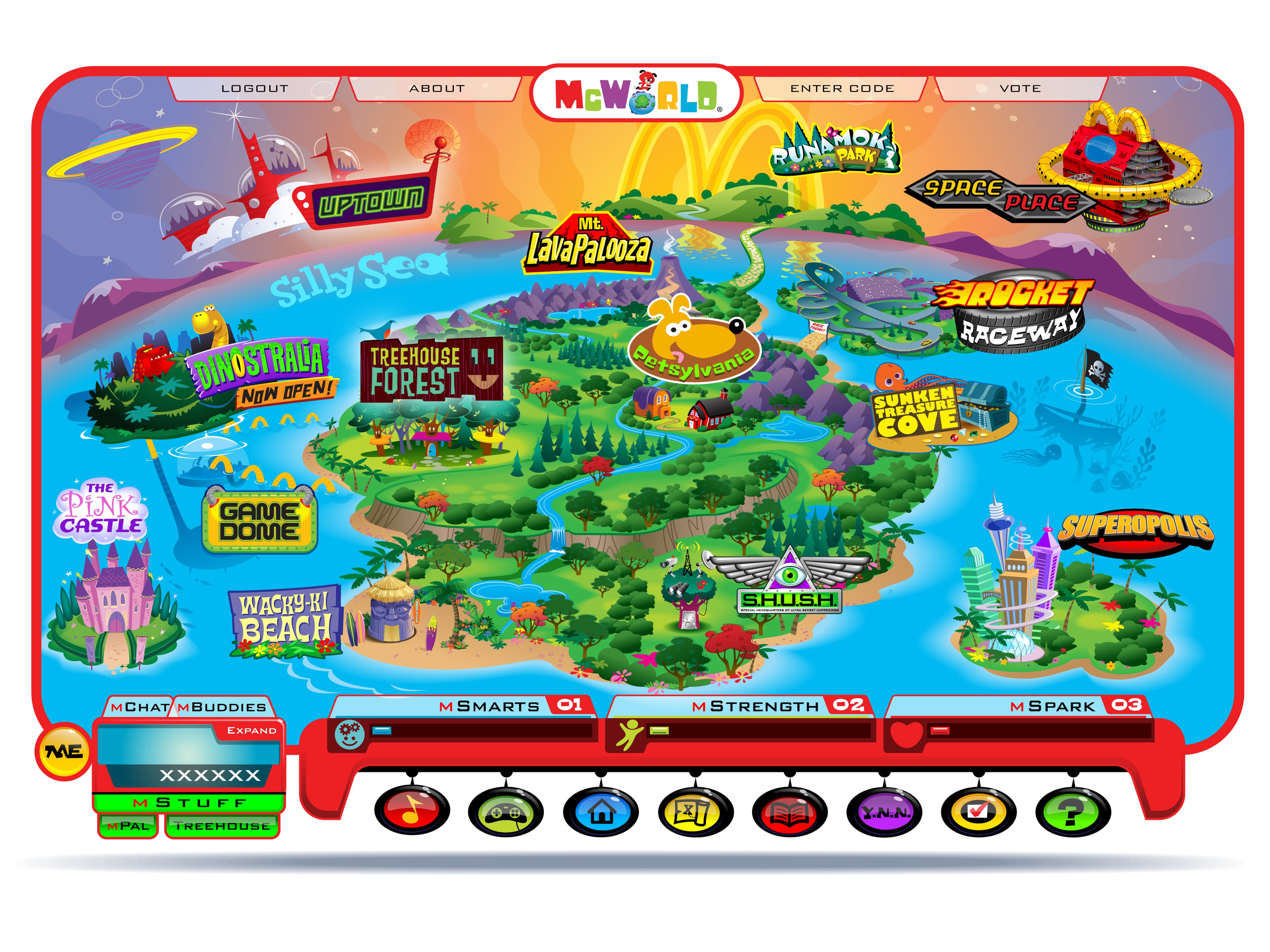
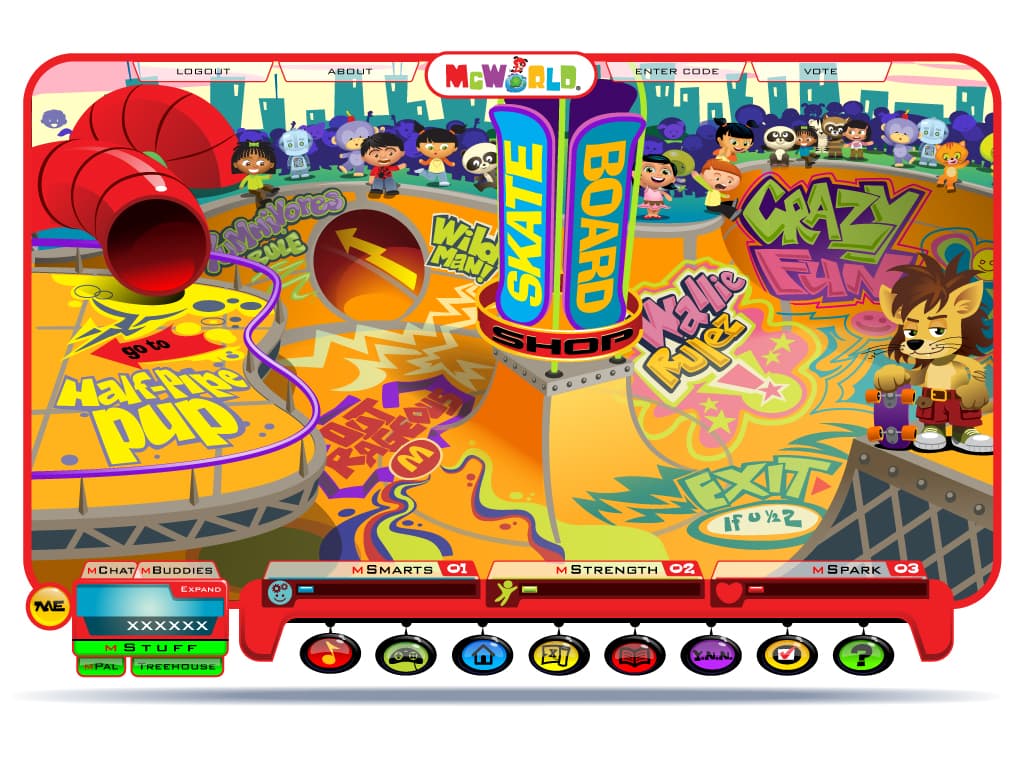
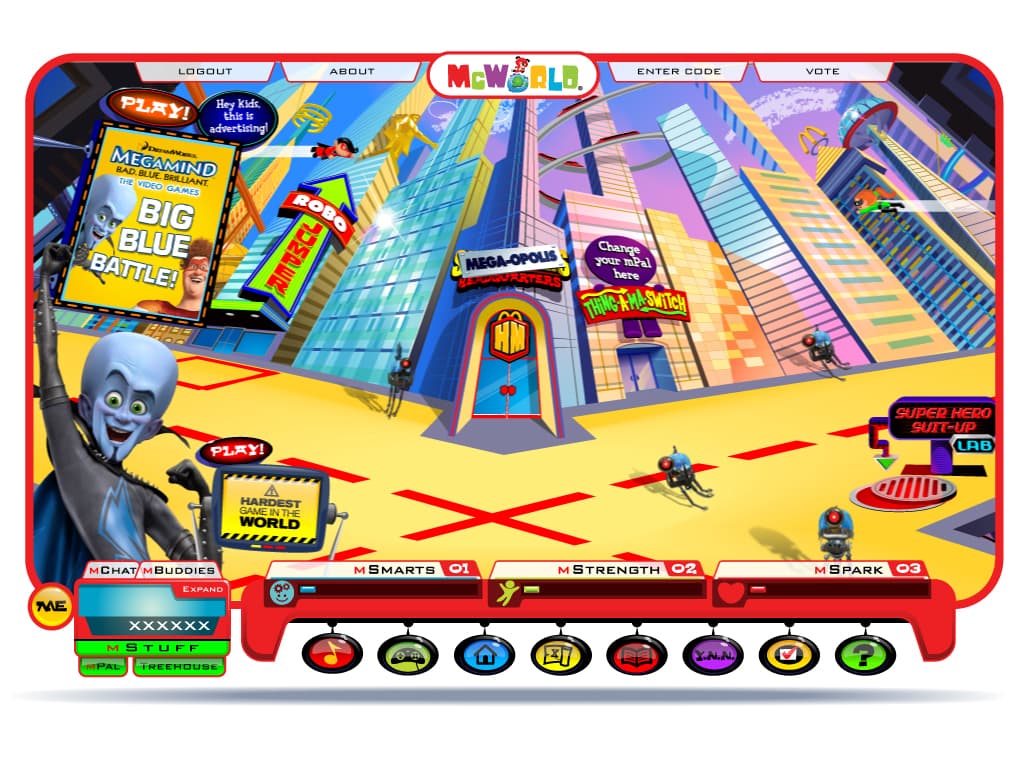
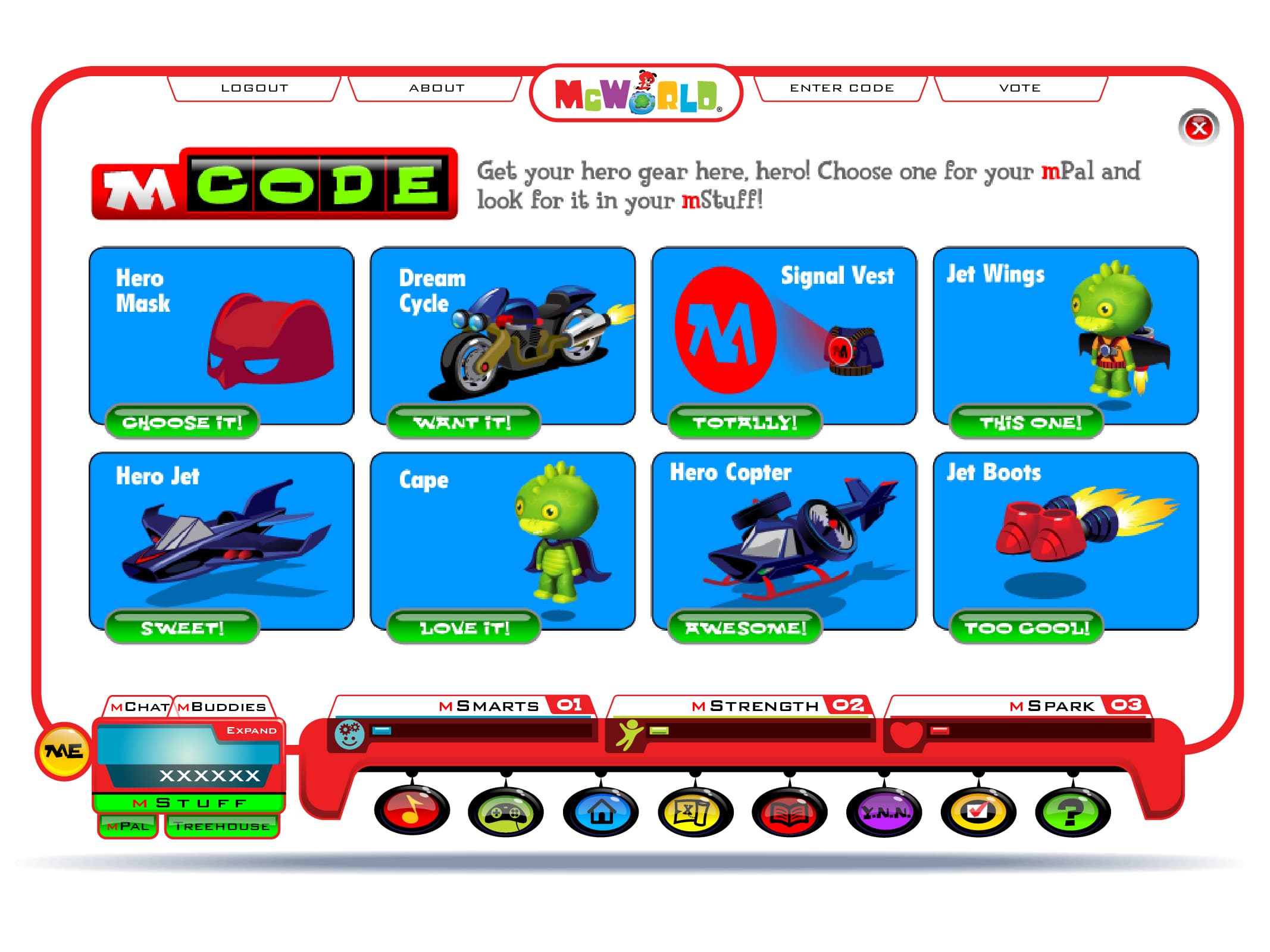
A kid signs in as their own mPal, drops onto the world map, and picks a direction: shared hangouts like a haunted house, a skate park, and a superhero zone where other children's avatars are milling around, or private rooms built around mini-games and a virtual pet. Winning those games pays out points and coins, which get spent on outfits for the avatar and furniture for a treehouse home base, while stats like smarts, strength, and spark climb depending on what the kid actually plays. Chat never leaves the keyboard free — every line is picked from a preset menu. The session's real hook sits in a section called mStuff: type in the mCode printed on whatever toy came in that day's Happy Meal, and the world unlocks gear from the franchise McDonald's is running that month — Transformers, Bakugan, Star Wars, Kung Fu Panda — so what's available to buy and wear changes every time the restaurant's toy lineup does.
- 1
Players arrive at happymeal.com's online club, which frames itself as a hub for games, prizes, avatars, shopping, friends, and treehouses. No account is required to start playing; registering asks for only minimal personal information.
- 2
The core setup is a character builder: players assemble an mPal avatar, choosing its look and outfit, alongside pre-made cast members like Fez the Monkey, Radish the Dog, and Yammy the Cat. The avatar carries three stats — smarts, strength, and spark — that rise through play and give players a reason to keep coming back.
- 3
From a world map, players choose which themed location to visit. Some spots are shared spaces populated by other kids, such as the Haunted Hideout, a skate park, and a superhero zone; others are single-player destinations built around specific minigames or pet care.
- 4
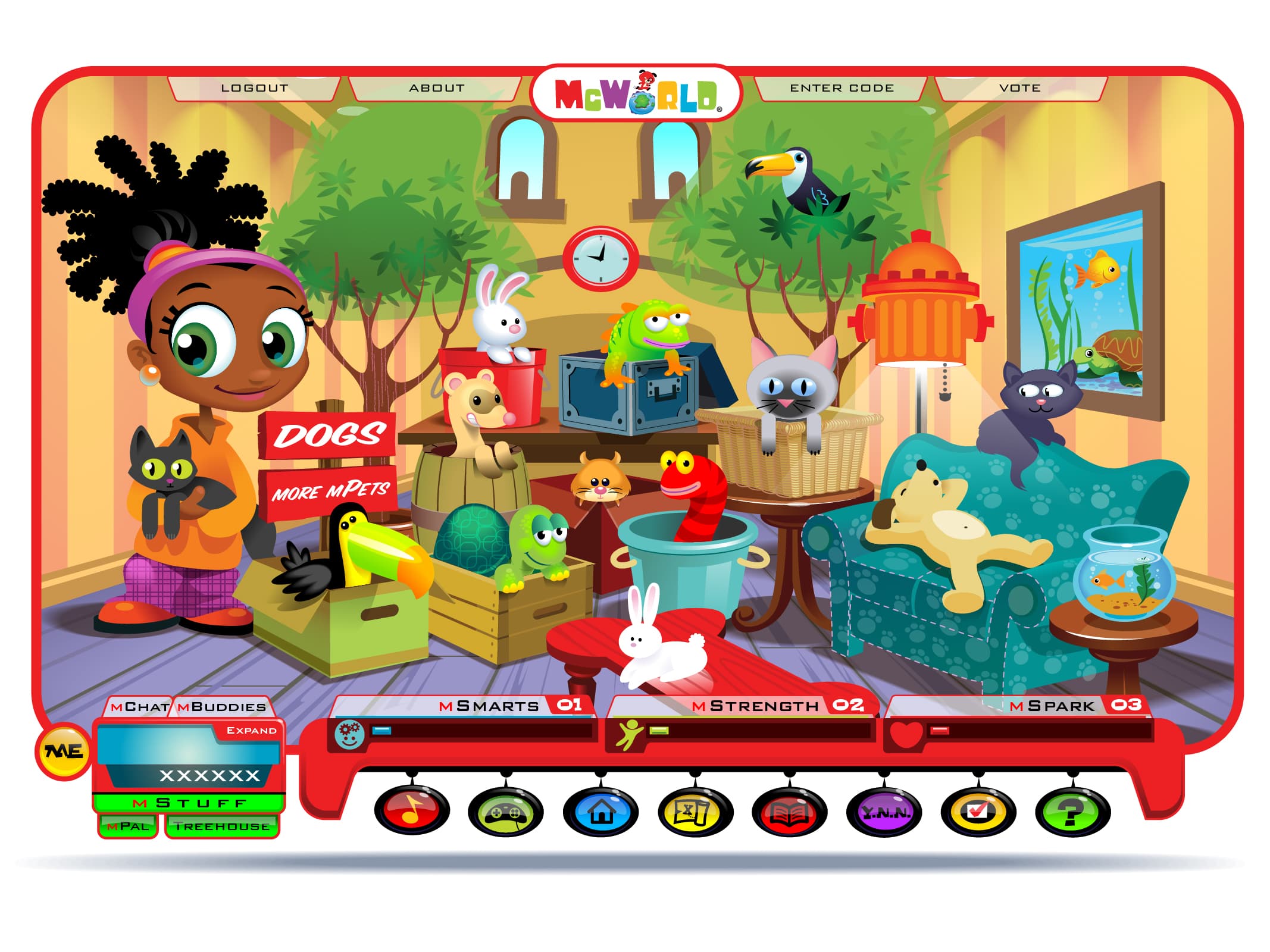
In Petsylvania, players adopt and play with a virtual pet; a separate title, Train a Pup, has them train a puppy, framed around the responsibility of caring for it.
- 5
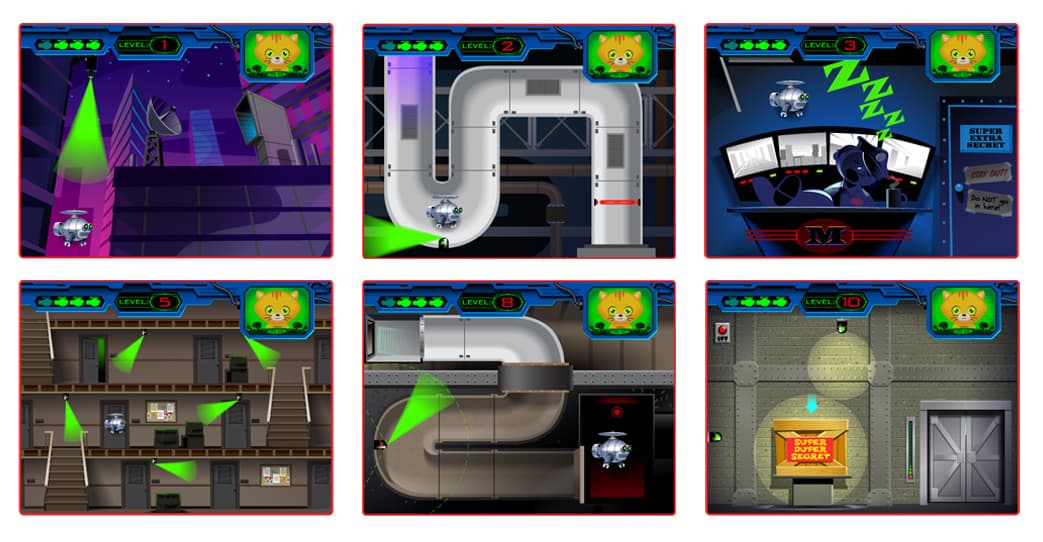
Minigames vary by location and genre, from arcade rounds like Tiki Toss and Bumper Cars to a stealth level where players guide a robot past enemies without being spotted.
- 6
Beyond minigames, the world offers creative builders: a monster maker for assembling a custom monster, and a music-video tool for editing together a clip on-site.
- 7
Players pick up quests and talk to NPCs around the world; quest progress is tracked on the avatar's card alongside its current state and outfit.
- 8
Playing minigames and completing quests earns points and coins, spent in shops on avatar accessories and on furnishing a personal treehouse that players build out over time.
- 9
A central hook ties the game to the restaurant: a printed mCode from Happy Meal toys, entered in the mStuff section, unlocks exclusive items tied to whatever licensed franchise is current — Power Rangers, iCarly, Transformers, Bakugan, Ben 10, Batman, Kung Fu Panda, and others.
- 10
Chat with other players is limited to picking pre-written lines rather than free text, and players can email their results to up to four friends. The world shut down on February 7, 2014, with players logging in one last time to say goodbye before it was replaced by the McPlay app.