







Collaborate Or Resist
- Brand
- Colony
- Year
- 2016
- Objective
- Awareness
- Industry
- Entertainment
- Mechanic
- Adventure & Quest
- Platform
- Web
- Agency
- Ludomade
Objective
USA Network wanted the world of Colony to keep evolving between broadcast episodes, giving fans a reason to check back every week instead of just tuning in on air night. The network framed it as using its "unlimited shelf space" to build out fiction the episodes had no room for, and timed the launch to double as a pre-premiere recruitment tool — registering an in-world ID badge ahead of the 14 January 2016 debut quietly signed fans up for series updates.
Solution
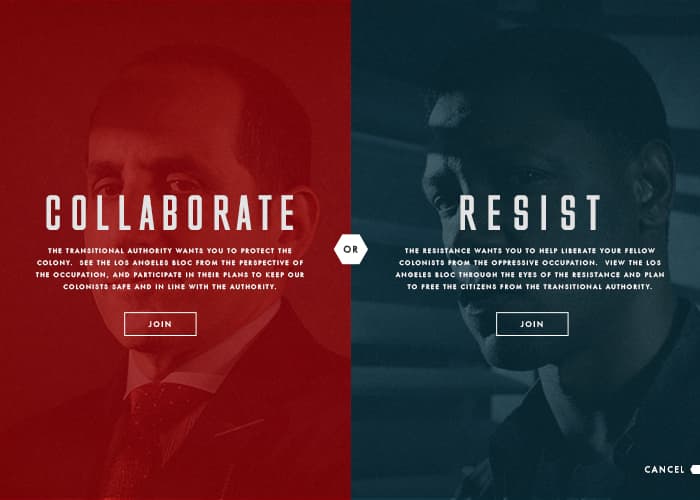
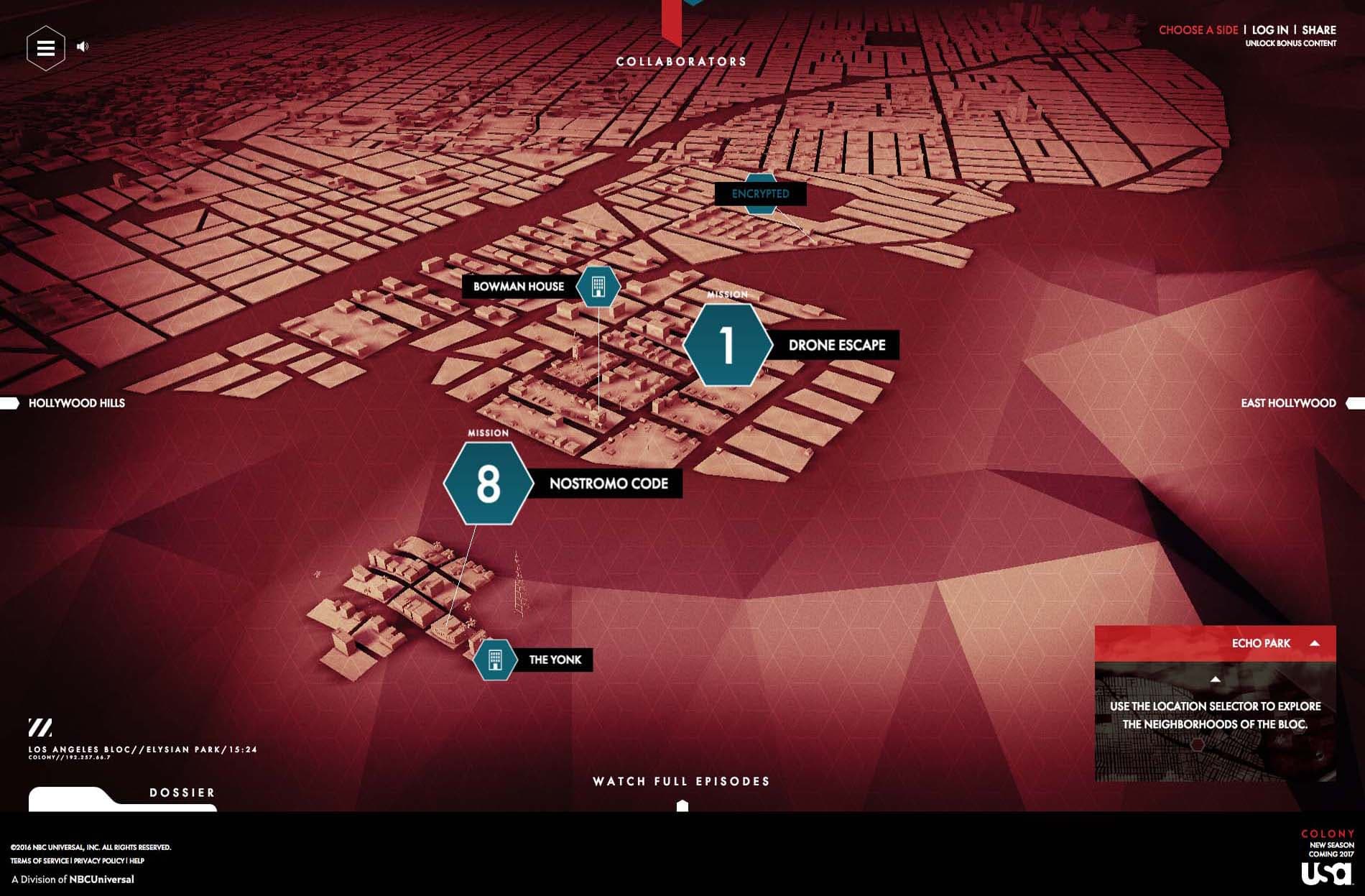
Players are issued a personal occupation ID badge, then dropped into a lived-in Los Angeles apartment they explore hotspot by hotspot — turning a radio dial to pick up clandestine Resistance broadcasts, flipping a TV between Transitional Authority propaganda and Homeland Security recruitment spots. From the apartment, the experience opens onto a map of occupied LA, where players declare an allegiance, Collaborator or Resistance, and watch the map re-skin around that choice, with different locations and intel unlocking depending on the side taken. Using a mini-map, players pan between neighbourhoods, visit locations from the show, and take on weekly missions to rank up and win prizes. A countdown timer teases further explorable sets still to come, so a session ends with a reason to return.
- 1
The player enters colonytv.com and identifies themselves, logging in via Facebook or continuing as a guest, to obtain an occupation ID badge. The badge displays the player's profile picture, name and registration date, standing in as identity papers under the occupation; players can also opt in to receive email updates about the series.
- 2
Players explore an in-world Colony apartment by clicking hotspots scattered around the room to ambient sound. The radio and television open into enlarged interactive views — tuning the radio manually picks up Resistance broadcasts from the figurehead Geronimo, while the TV remote flips between in-world propaganda, including speeches by Proxy Alan Snyder and Homeland Security recruitment ads — and other objects such as flyers, windows, ID badges and grocery baskets reveal further details of occupied life. A countdown timer signals that additional explorable sets will unlock later.
- 3
The player opens a WebGL map of occupied Los Angeles and picks a side, joining the Resistance or serving as a Collaborator. The map's colours, visible locations, available information, and which places are locked or unlocked all change to match the chosen allegiance.
- 4
Players pan across the city via a pop-up mini-map menu that jumps between neighbourhoods, visiting location pins tied to the television series and reading the intel attached to each.
- 5
New secret missions are issued weekly and carried out on the map on behalf of the player's chosen faction.
- 6
Players can switch allegiance to become a double agent, unlocking classified intel belonging to both sides.
- 7
Completing missions and interacting with the site earns achievements, raises the player's rank, and enters them into competition for prizes tied to the weekly missions.
- 8
Alongside the map, players watch in-world story content: the Proxy Snyder propaganda video series and "Arrival" stories about ordinary people adjusting to the occupation.
- 9
Players can share their progress and badge to social media and follow links out to the official show site for trailers and behind-the-scenes material.