









Threat Busters
- Brand
- Cisco
- Year
- 2019
- Objective
- Engagement
- Industry
- Tech & Telecom
- Mechanic
- Adventure & Quest
- Platform
- Web
- Agency
- Marcoracio

Objective
Cisco Umbrella wanted to put its threat-intelligence research in front of security professionals in a format other than dry reports and IOC lists. The brief was to make the work behind the Umbrella platform memorable and worth returning to, and to give the sales journey an ongoing touchpoint rather than a one-off campaign asset.
Solution
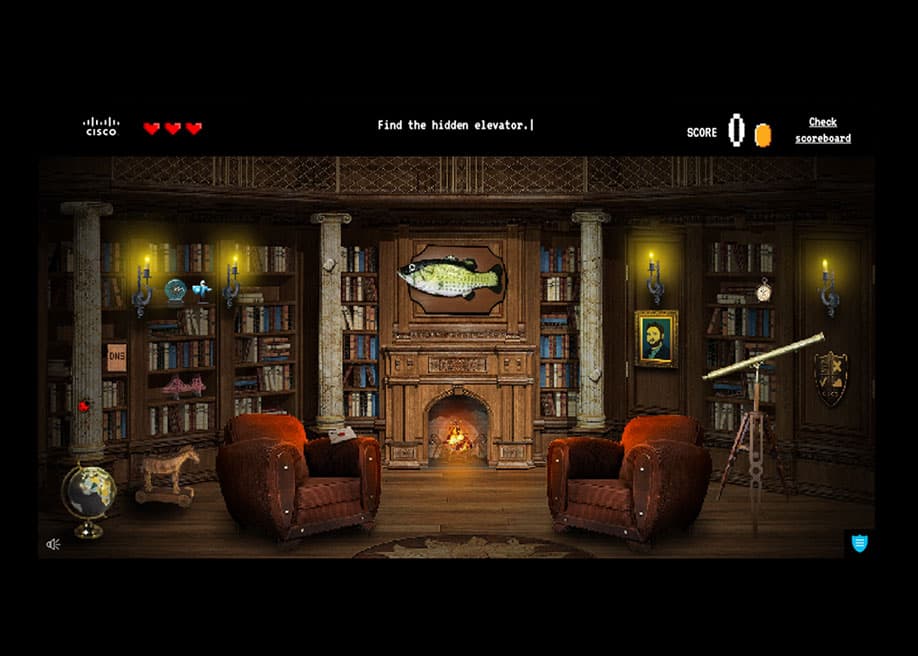
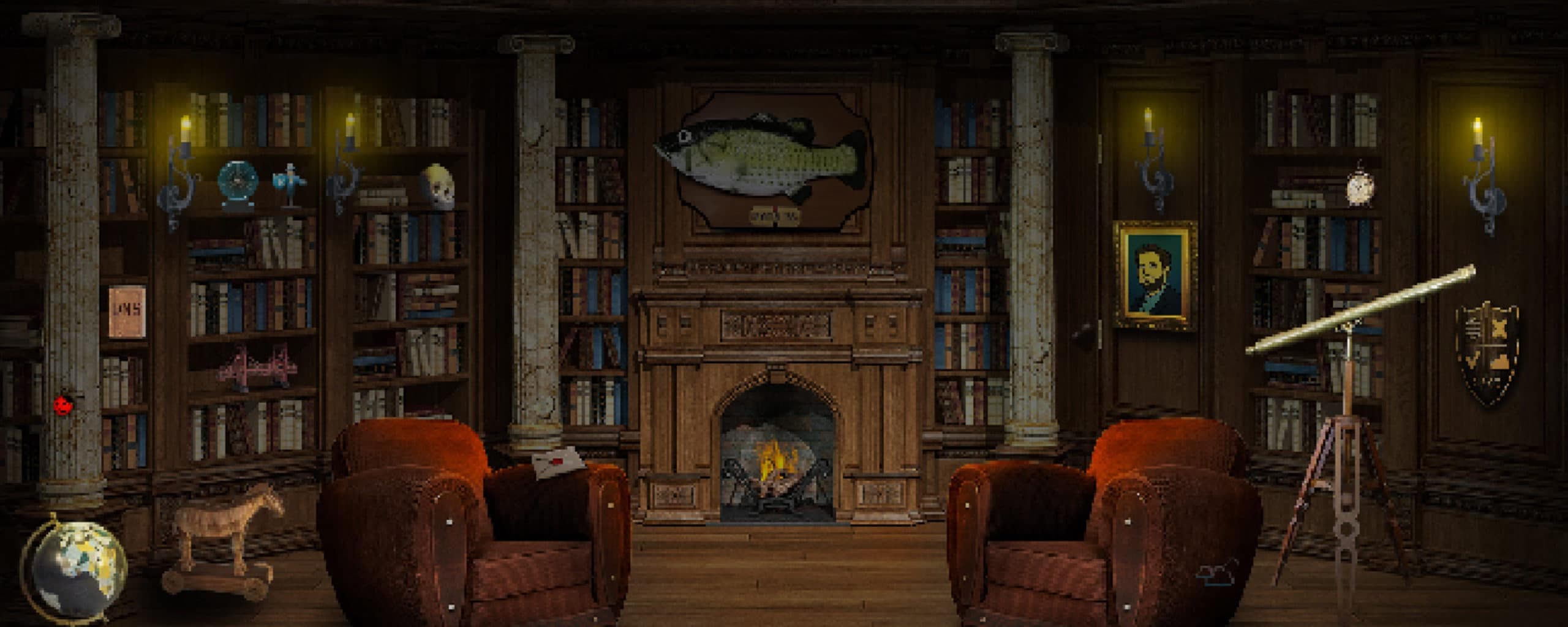
Recruited into the fictional Cisco Bureau of Cyber Intelligence, the player is dropped into a pixel-art underground cyberworld and clicks through rooms built around a library, an underground cryptomine, a phishing scheme and a ride on a Trojan horse, hunting for hidden objects that add bonus points along the way. A shield icon opens a teleport menu that jumps between rooms and three research hubs — Threat Directory, Attack Briefings and Resource Vault — where the pixel scenery gives way to real threat-trend charts, plain explanations of how Umbrella blocks each attack, and actual indicators of compromise. Quizzes and code-entry puzzles gate progress and level the player up along the way. The run ends at Bureau headquarters, where the player enters a name and submits their score to a global leaderboard.
- 1
The game opens on a fullscreen retro title screen with a mission briefing about defending against cyberattacks; the only action is a button to accept the mission.
- 2
Accepting teleports the player into a pixel-art underground world, where a score counter appears in the top bar and stays visible for the rest of the run.
- 3
The core loop is exploration for points: the player moves through a series of themed rooms — a library, an underground cryptomine, a phishing expedition, a Trojan horseback ride, and finally a Bureau of Cyber Intelligence headquarters — clicking scenery and hidden objects to add to the score, and passing between rooms through connecting elevator and game-room spaces via movement controls and "Continue"/"Next"/"Skip ahead" prompts.
- 4
A shield-menu icon lets the player jump non-linearly between locations and content hubs at any time instead of following a fixed path.
- 5
Certain rooms turn the loop into a threat-identification quiz: the player is shown a scenario, such as a phishing infection, and picks from multiple-choice answers about cybersecurity practice — a correct answer scores points and unlocks the next room, while a wrong one prompts a retry.
- 6
Some doors are locked behind a code-entry challenge built on cyber-history trivia questions; players who don't know the answer can bypass the lock and move on, but forfeit the points.
- 7
The shield menu also opens three real-world content hubs — a threat directory, attack briefings, and a resource vault — that break from the game fiction to present actual Cisco threat-intelligence research, trend data, and indicators of compromise.
- 8
A scoreboard can be checked at any time to see the current score against a ranked leaderboard; the player can then submit their name to lock in a placing or keep playing to hunt for more points.
- 9
The session ends on a closing screen inviting the player back for new threat content and a chance to beat their score.