





Eye Test
- Brand
- ESPN
- Year
- 2015
- Objective
- Engagement
- Industry
- Entertainment
- Mechanic
- Quiz & Trivia
- Platform
- Web
- Agency
- Isabelalevy
Objective
ESPN Brazil wanted to sell HD broadcasts of the UEFA Champions League to Brazilian football fans, but first had to get men who assume their eyes are fine to notice otherwise: the campaign cited figures showing most Brazilian men skip regular eye exams even though early diagnosis prevents most vision problems. The pitch was simple — you can't fully enjoy HD football with bad eyesight, so get checked, then watch the games on ESPN.
Solution
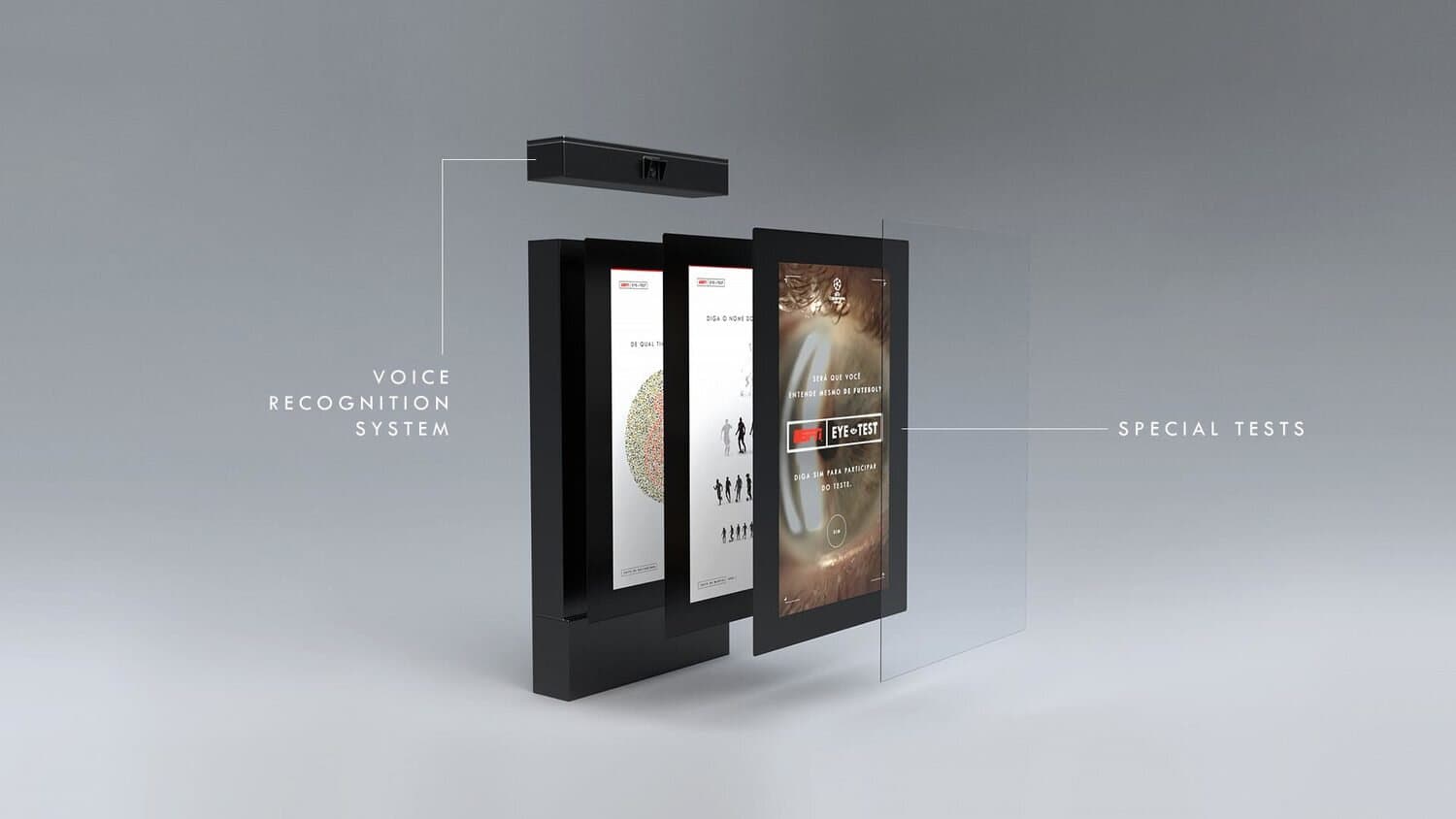
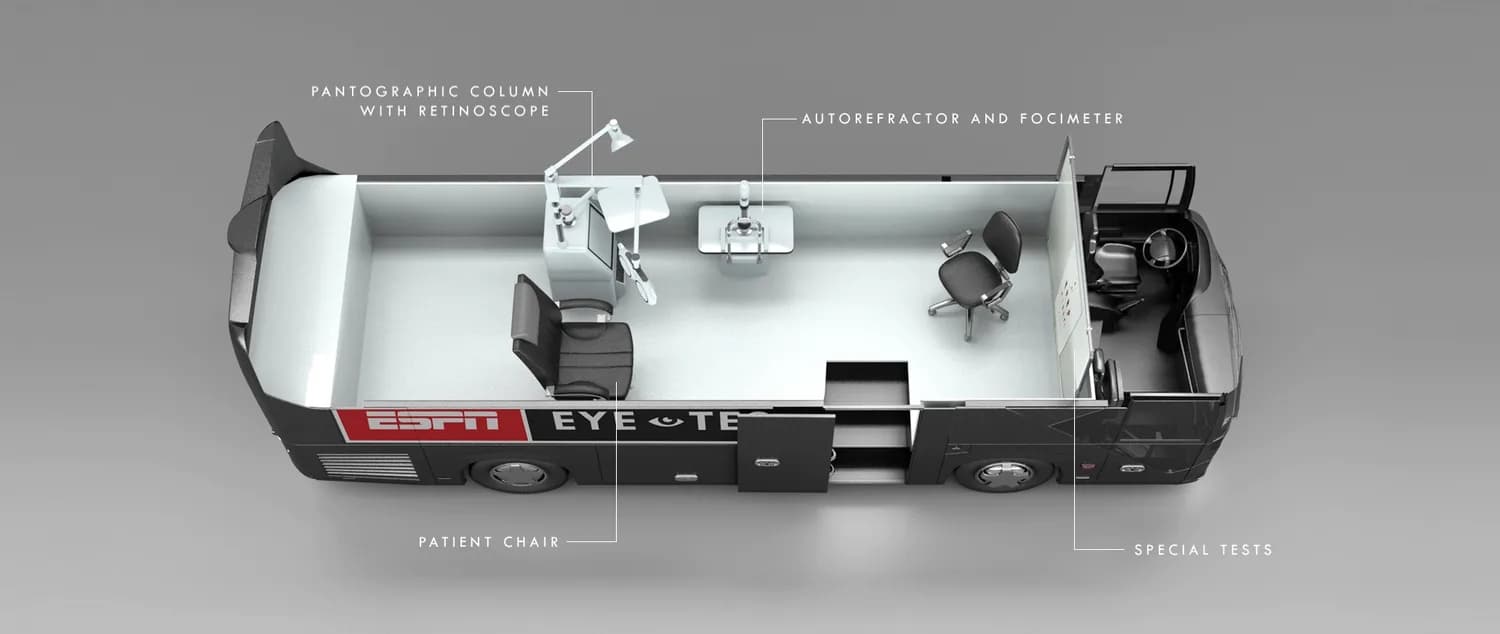
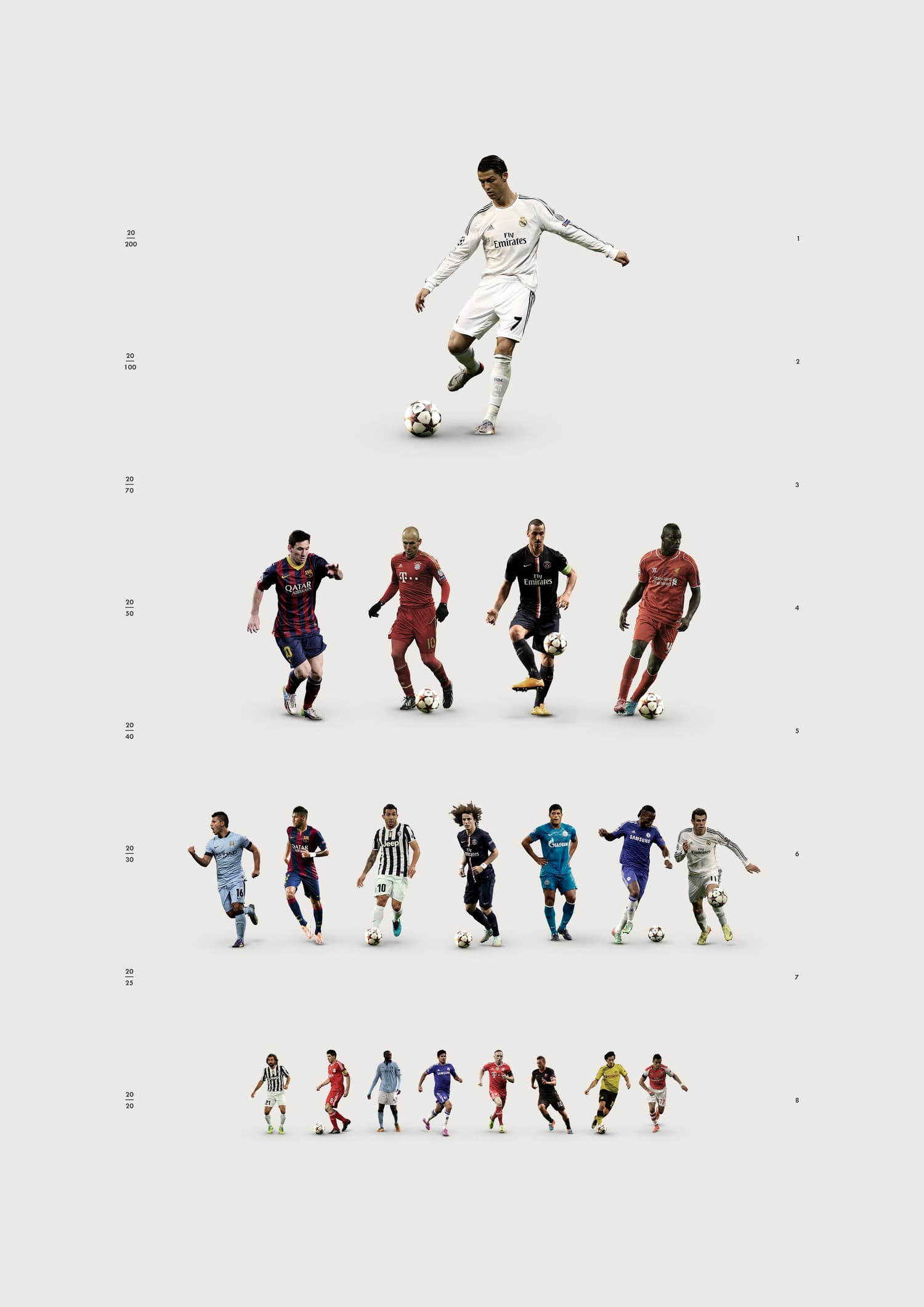
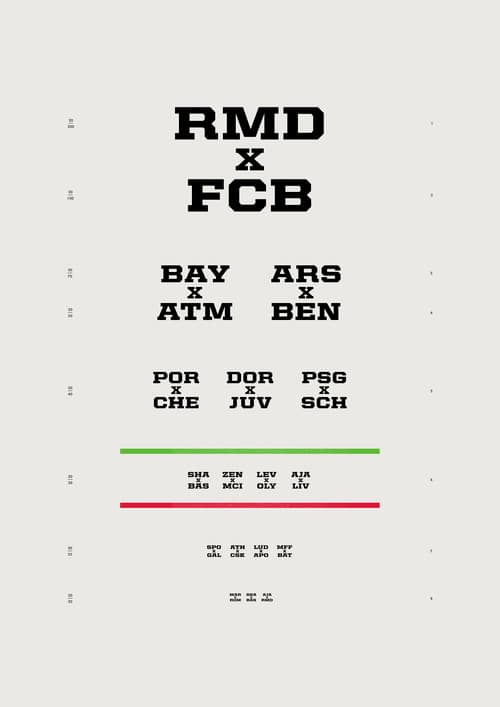
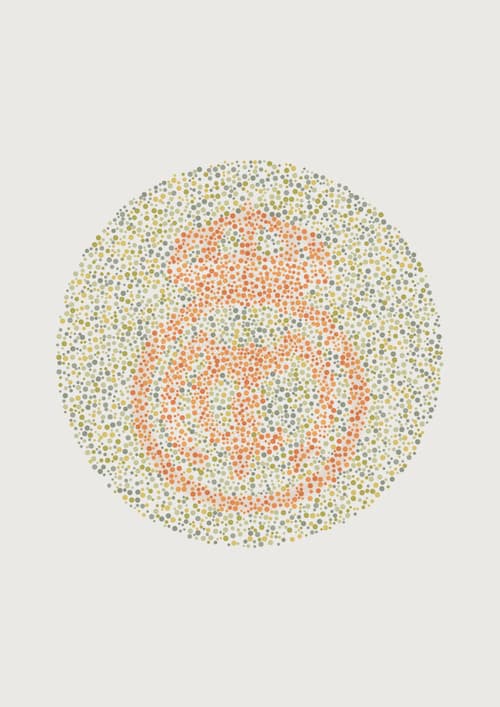
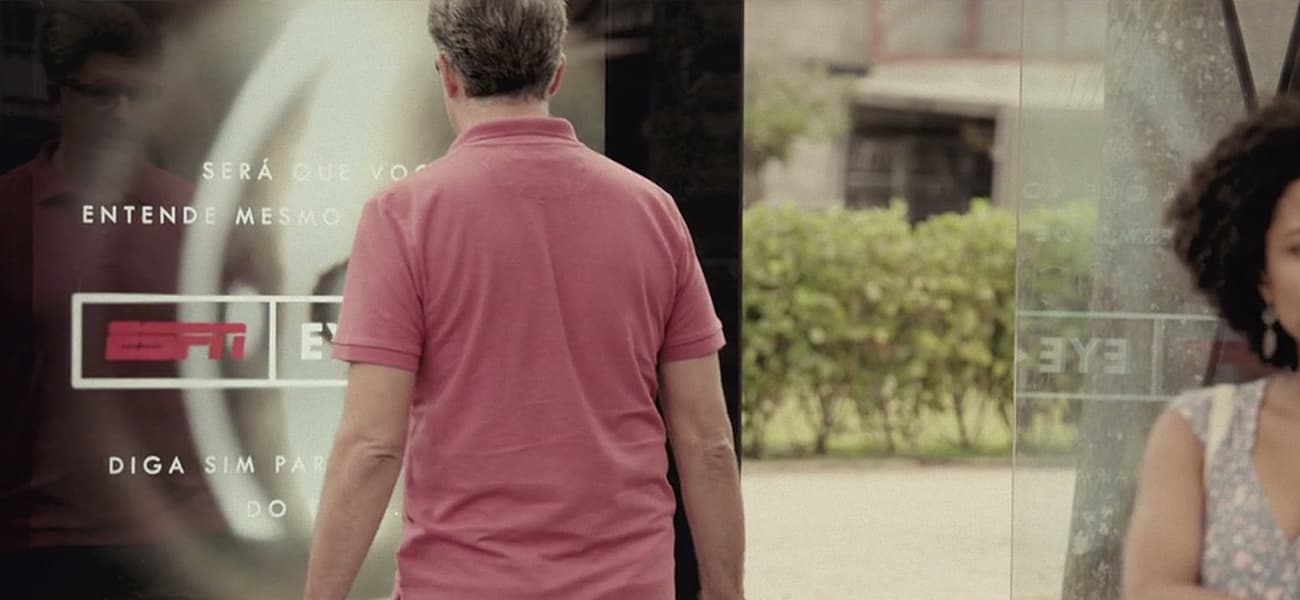
The player opens espneyetest.com, turns on their webcam and mic, and backs away from the screen the way they would at an optometrist's office. Instead of letters on a chart, faces of footballers and club crests shrink line by line, and the player calls out each one; speech recognition listens and scores the answers. The test runs through several rounds — near-sightedness (twice), colour blindness, and contrast sensitivity — before delivering a verdict: pass, and the site tells the player to watch the Champions League in HD on ESPN; fail, and it tells them to book an eye exam. The same format also ran offline as an interactive bus shelter (stand behind a red line and call out the shrinking faces) and as a branded ESPN Eye Test bus staffed with a real ophthalmologist, which toured fans and referred anyone found with glaucoma or cataracts for treatment.
- 1
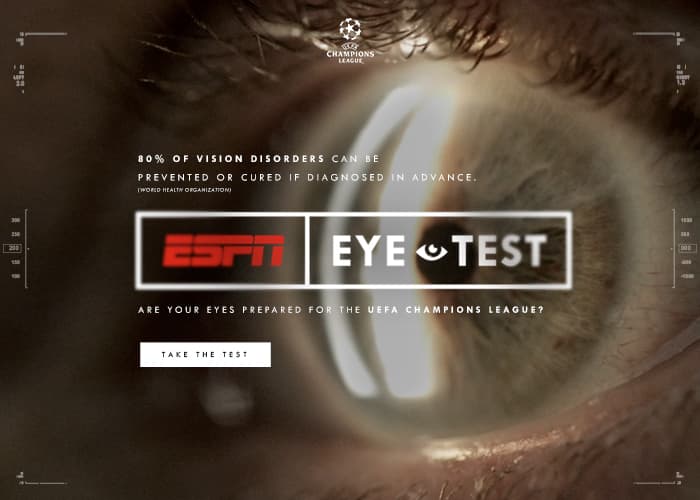
The player lands on espneyetest.com and is challenged with a pitch: ESPN broadcasts the UEFA Champions League in HD, so is the player's own eyesight sharp enough for it. The site offers an eye test to find out.
- 2
Before starting, the player enters their age, which the site uses later to interpret the test result.
- 3
The player grants the site access to their webcam and microphone: the camera monitors them during the test, and the microphone captures their spoken answers.
- 4
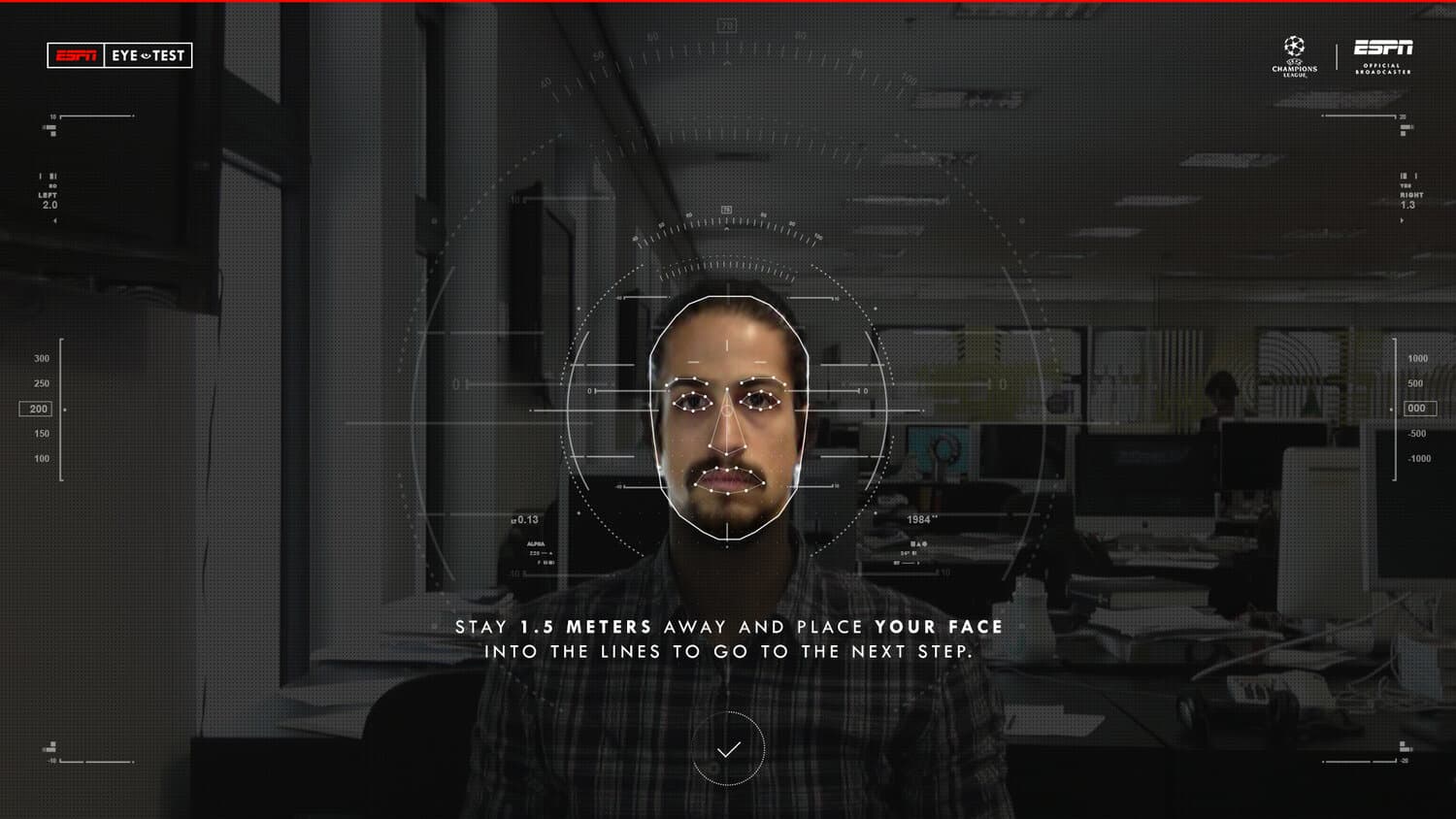
The site instructs the player to step back and hold a set distance from the camera, mimicking an optometrist's chart on a fixed wall. The test will not begin until that distance is held.
- 5
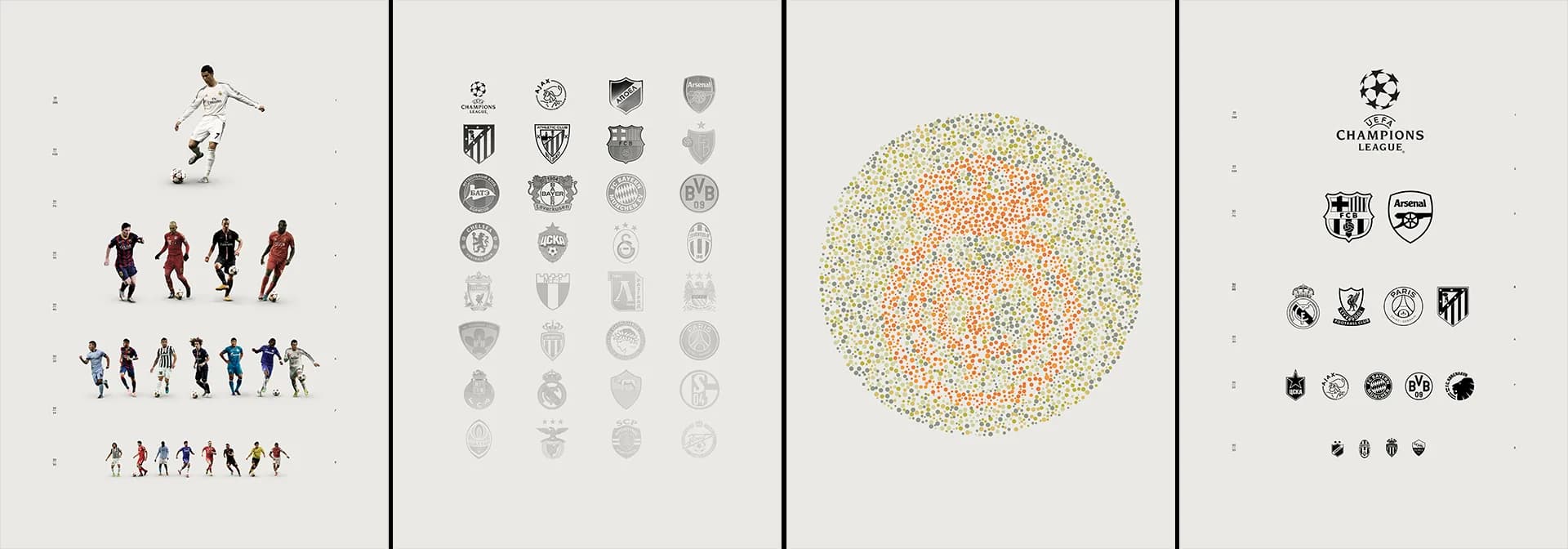
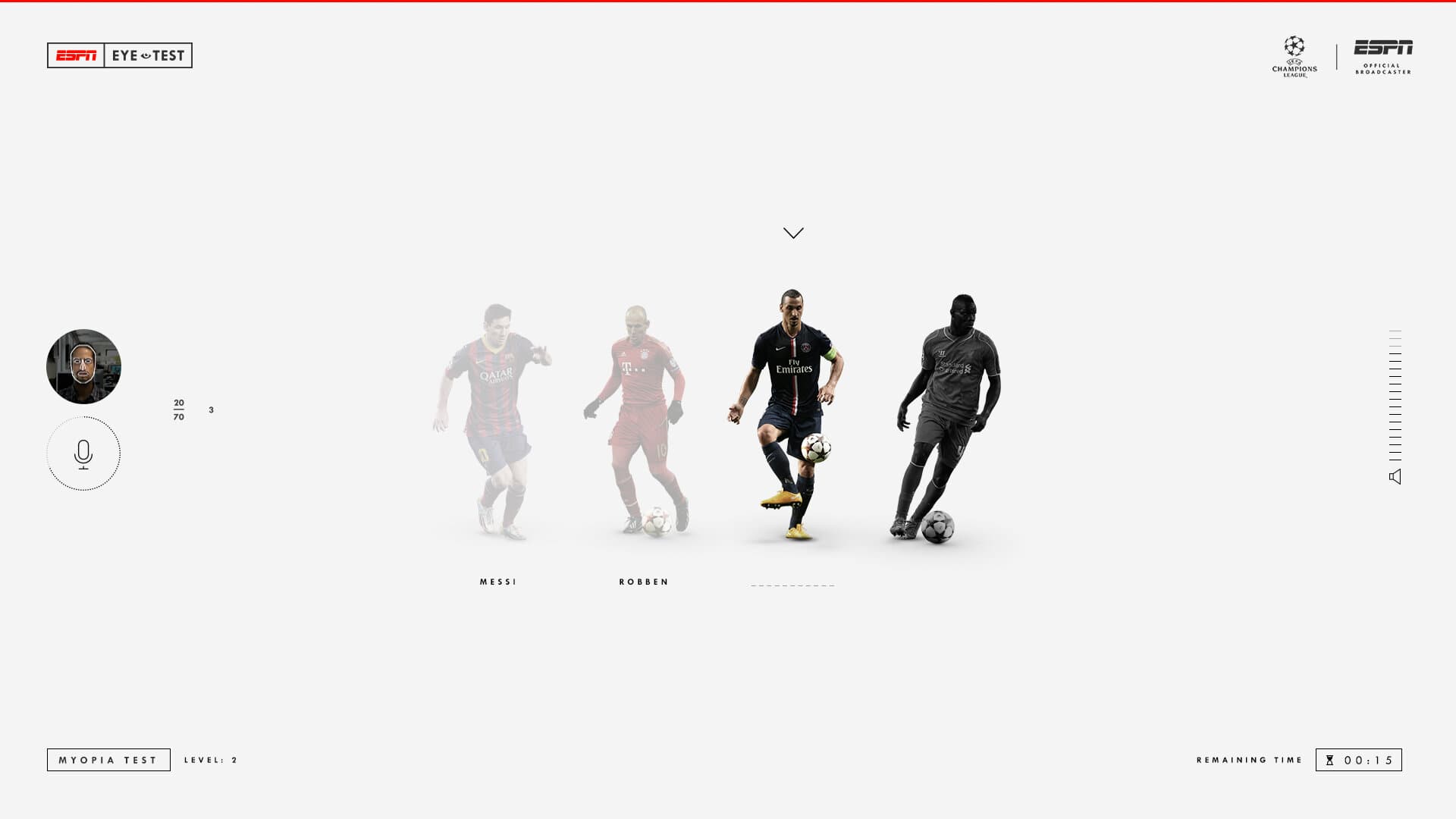
The core test measures near-sightedness: rows of Champions League player faces and club crests appear in place of letters, shrinking row by row. The player calls out each name or crest aloud, speech recognition checks the answer and shows a correct/incorrect result on the spot, then the test advances to the next, smaller row; this near-sightedness block runs through two separate rounds.
- 6
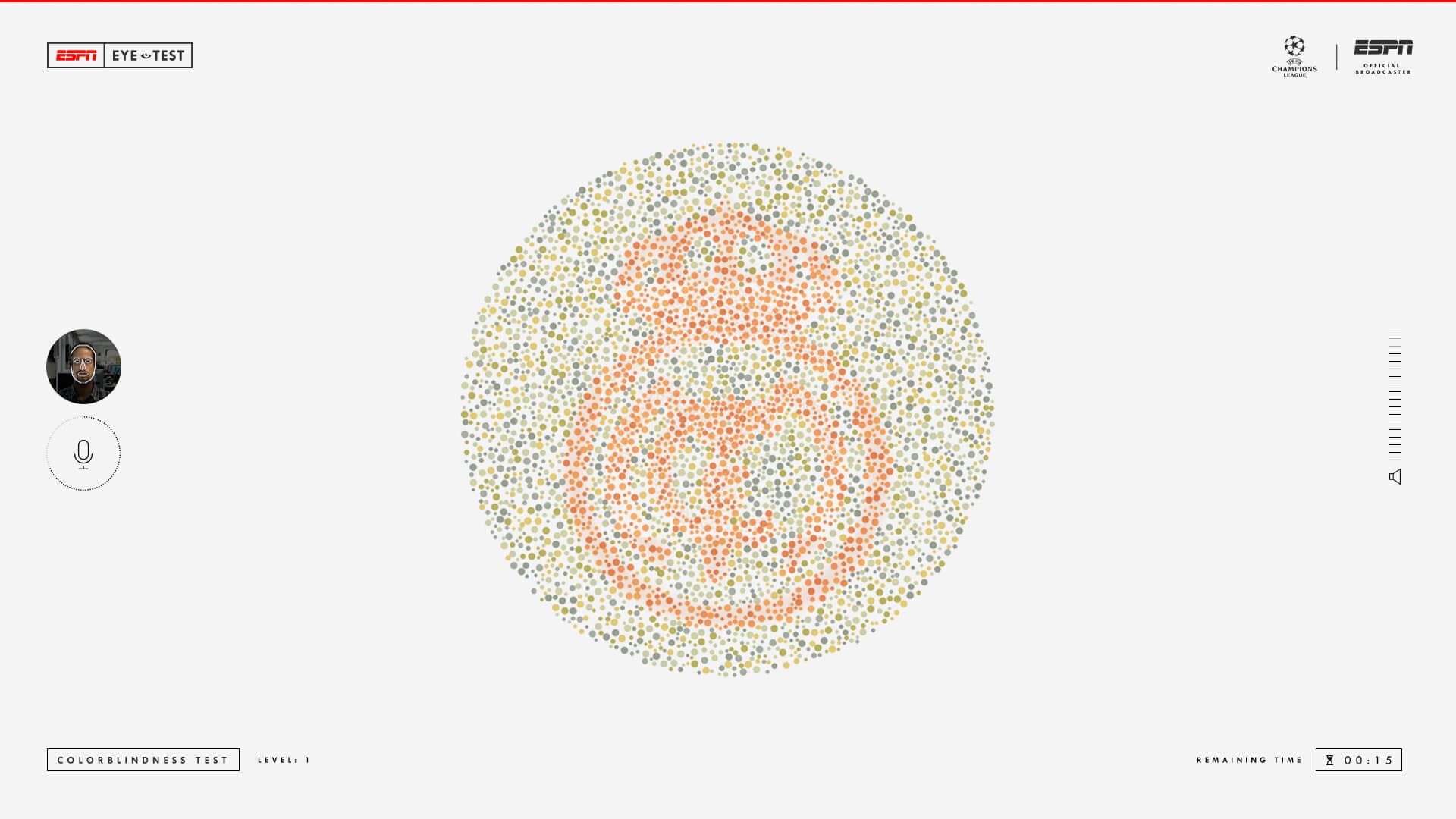
A color-blindness block follows, presenting challenges built from club colors and crests that the player again identifies by speaking the answer.
- 7
A contrast block shows player photos and club crests fading progressively paler against the background, and the player must identify each one while it is still visible.
- 8
At the end, the player receives a verdict: either their vision passes and they're set to watch the Champions League in HD on ESPN, or the result suggests booking a real eye exam before the next match.